
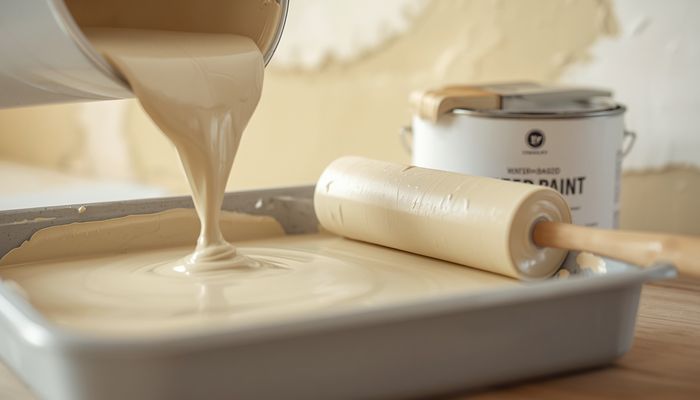
The first gallon of paint I ever bought was oil-based. I didn’t know the difference. I was nineteen, painting my first apartment bedroom, and the guy at the hardware store handed me a can of alkyd semi-gloss. “This’ll cover anything,” he said. He wasn’t wrong. It also took sixteen hours to dry, smelled like a chemical weapons facility, and required mineral spirits to clean my brush — which I didn’t own — so I threw the brush away.
I have since painted every room in four different houses. I’ve used everything from $18 contractor-grade flat white to $85 Benjamin Moore Aura. I’ve painted in 95-degree heat and in a house with no heat at all. I’ve used rollers, brushes, sprayers, and once — in a fit of desperation — a sponge. Here’s what I know now about choosing between water-based and oil-based paint, and which one actually belongs on your walls.
The Real Difference Between Water and Oil
Latex paint isn’t latex. That’s the first thing. Nobody is harvesting rubber trees to make your wall paint. The word stuck around from the 1940s when synthetic rubber was the new miracle material, and the paint industry borrowed the name. What you’re actually buying is an acrylic or vinyl-acrylic resin suspended in water. When the water evaporates, the plastic particles fuse into a film. That’s it.
Oil-based paint — properly called alkyd — uses mineral spirits or petroleum distillates as the carrier. The resin is different, the chemistry is different, and the result is a harder, glassier finish. It also yellows over time, especially in rooms without much natural light. I learned this the hard way on white kitchen cabinets that turned the color of butter within three years.
The practical differences come down to four things: drying time, cleanup, durability, and smell.
Water-based dries to the touch in 30 to 60 minutes. You can recoat in two hours. Oil-based needs six to eight hours minimum between coats, often overnight. Water-based cleans up with warm water and a little dish soap. Oil-based requires mineral spirits or paint thinner, and you can’t pour either down the drain. Water-based smells for a few hours with a window open. Oil-based smells for days and the headache is real — those VOCs aren’t imaginary.
What I Buy and Why
For interior walls, I’ve settled on Sherwin-Williams SuperPaint in eggshell for most rooms and Duration in satin for kitchens and bathrooms. SuperPaint runs about $55 a gallon at full price, but Sherwin-Williams runs 30-40% off sales every other month like clockwork. Never pay full price at Sherwin-Williams. Benjamin Moore Regal Select is equally good and costs about the same. I prefer the Benjamin Moore colors but the Sherwin-Williams store is closer to my house, so that’s usually what wins.
The paint-and-primer-in-one claims are mostly marketing. On previously painted walls in decent shape, sure, skip the primer. On bare drywall, stained surfaces, or anything glossy? Use primer. I keep a gallon of Kilz Premium on hand for stain blocking and a gallon of Zinsser Bulls Eye 1-2-3 for general purpose. Primer is cheaper than an extra coat of $55 paint, and it does a better job of hiding imperfections than paint alone.
For trim and doors, I actually still use oil-based paint. I know, I know. But water-based trim paint — even the good stuff like Benjamin Moore Advance or Sherwin-Williams ProClassic Waterborne — doesn’t level out the same way. Oil-based enamel self-levels into a glass-smooth finish that hides brush strokes. It’s harder. It holds up better on door frames and baseboards that get kicked and bumped. Advance is close. It’s an alkyd-water hybrid that cleans up with soap and water and levels beautifully. If you want the oil look without the oil cleanup, it’s the best option I’ve found.
Sheen Matters More Than Brand
I’ve made the mistake of putting flat paint in a kitchen. Don’t. Every splash of pasta water, every fingerprint, every cat brushing against the wall left a mark that wouldn’t wash off. Flat paint has microscopic texture that traps dirt; you can scrub it, but you’ll just burnish the finish into a shiny smear.
Here’s my rule: flat on ceilings only. Eggshell or matte in bedrooms and living rooms — washable enough for occasional cleaning, flat enough to hide drywall flaws. Satin in hallways, kids’ rooms, and dining rooms. Semi-gloss in kitchens, bathrooms, and on trim. High-gloss only on things you want to look like a piano.
Different brands use different names for these. Benjamin Moore calls eggshell something else entirely — their “eggshell” is closer to satin. Read the sheen chart on the back of the can or ask someone at the store. I’ve bought the wrong sheen twice because I assumed the name matched what I wanted.
Application Mistakes I’ve Made
I once painted an entire bedroom with paint I’d shaken — not stirred — and every square inch had tiny pinprick bubbles that dried into a sandpaper-like finish. Shaking introduces air. Stirring doesn’t. Use a stir stick or a drill attachment and mix for a full minute. The pigment settles at the bottom of the can, especially with darker colors, and if you don’t mix thoroughly, the color shifts as you work through the gallon.
I’ve painted in temperatures that were too cold — about 45 degrees in an unheated garage — and watched the paint fail to cure properly. It stayed soft and tacky for weeks. Most latex paints need at least 50 degrees Fahrenheit, not just during application but for the full cure period, which can be up to thirty days. Read the can. The temperature range is not a suggestion.
I’ve also painted latex directly over oil-based trim without sanding or priming. It peeled off in sheets within a month. Latex needs a mechanical bond — it can’t grip a glossy oil surface without help. Sand the gloss off or use a bonding primer. The Zinsser Bondz primer in the taupe can is specifically made for this transition and it works.
When Oil-Based Still Wins
Despite everything I’ve said, I keep a quart of oil-based primer around. For knot bleeding — those amber stains that seep through latex no matter how many coats you apply — nothing beats oil-based primer. Shellac-based primers like Zinsser B-I-N work too, and they dry faster, but they smell like a distillery. Oil-based primer seals knots permanently.
For exterior work, 100% acrylic latex is the standard now and it’s genuinely better than oil. It expands and contracts with the house. It breathes so moisture doesn’t get trapped. It resists UV fading. Sherwin-Williams Duration Exterior and Benjamin Moore Aura Exterior are both excellent. I painted my shed with Aura five years ago and it still looks fresh. The oil-based barn paint from the previous owner was chalky and peeling within two years.
Latex paint has won the war. It’s better for the environment, easier to use, and in most applications, performs as well or better than oil. The only holdouts are trim, doors, and stain-blocking primers, and even those gaps are closing. The hybrid alkyd-water products are the future — oil performance without oil problems. I wish they’d existed when I threw away that first brush.
Exactly the kind of practical info homeowners need. Clear, concise, and actionable.
How long does a typical installation take for a 200 sq ft room? Trying to plan my weekend project.