
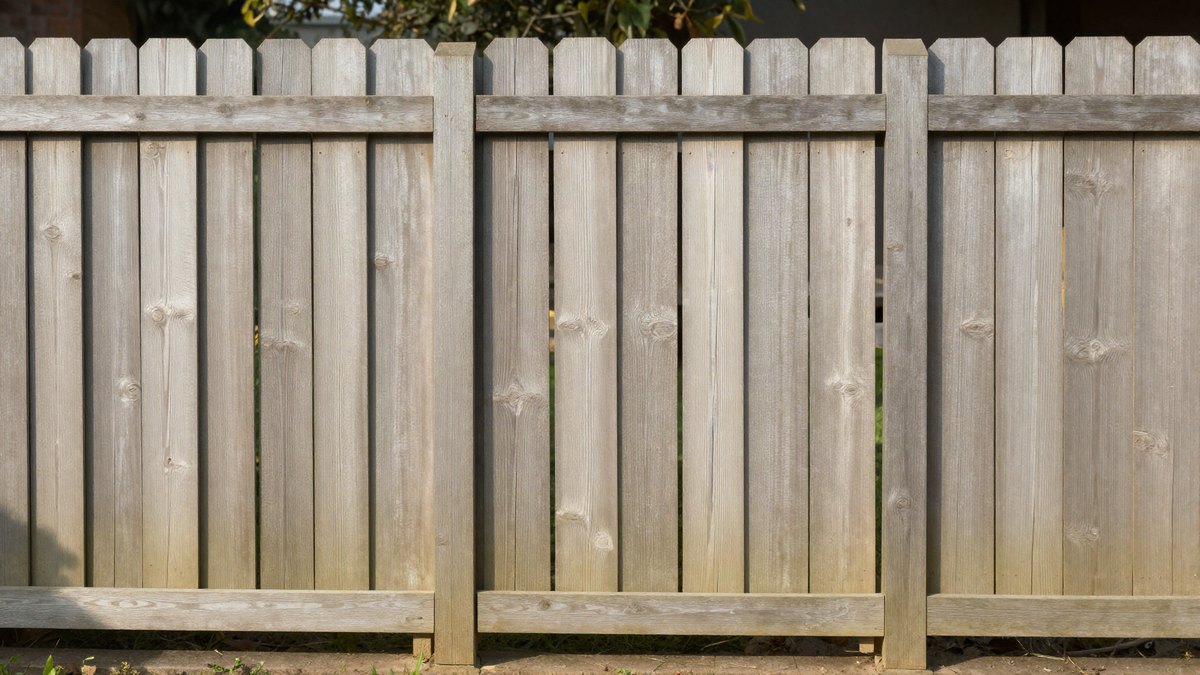
Our backyard butts up against three neighbors and none of us have fences. It is like living in a fishbowl. Every time I grilled burgers, the neighbor’s dog wandered over. Every time my kids played in the sprinkler, the other neighbor’s teenagers watched from lawn chairs like it was reality TV. My wife finally put her foot down: we were getting a fence.
The quotes we got ranged from $3,200 to $4,800 for 100 linear feet of six-foot privacy fence. That felt absurd for what is essentially posts, rails, and pickets. So I did what any stubborn homeowner does — I decided to build it myself.
What This Actually Cost Me
I built exactly 96 linear feet of fence. Here is where the money went, line by line.
Pressure-treated 4×4 posts, eight feet long, were $14 each. I needed 13 posts because I spaced them 8 feet apart on center with an extra one for the gate. That came to $182. For the rails, I used pressure-treated 2x4s at $6 each — three rails per section (top, middle, bottom) times 12 sections, so 36 rails for $216.
The pickets were dog-eared cedar tone pressure-treated pine, six feet tall, at $3 each. I used about 160 pickets for full privacy spacing with no gaps. That was $480 and it was the single biggest expense by far. You can save money by spacing pickets with a quarter-inch gap, but my wife wanted privacy and I was not about to argue.
Quikrete: 26 bags at $7 each. Two bags per post hole. That is $182 in concrete. I went through a 5-pound box of 3-inch deck screws for the rails ($12) and two boxes of 1.5-inch fence screws for the pickets ($20).
Tools I had to buy: a manual post-hole digger for $28, a 4-foot level for $18, string line and stakes for $8, and a miter saw blade for $15 because mine was dull. I already had a circular saw, a decent cordless drill, hammer, tape measure, chalk line, and safety glasses. If you need to buy a saw, a basic corded circular saw runs about $60.
Total for materials: roughly $870. Add a gate latch kit for $25 and the total was just under $900.
The Build: Sweat, Concrete, and a Lot of Checking Plumb
This project consumed two full weekends and a few evenings after work. I will not sugarcoat it — digging post holes is brutal, and I had already learned that building the deck the year before. I did 13 holes, each 10 inches wide and 30 inches deep (I live where the ground freezes, so I had to go below the frost line). The first three holes felt manageable. By hole eight I was questioning my decision-making skills. By hole 13 I had blisters on my blisters.
Here is the rhythm I settled into: dig a hole, dump 6 inches of gravel for drainage, drop in the post, check plumb on two sides with the 4-foot level, dump two bags of dry concrete mix into the hole, add water from the hose, tamp with a stick to remove air pockets, check plumb one more time, brace with scrap 2x4s screwed to stakes, move to the next hole.
I set the corner posts first. Then I ran a string line between them, pulled tight at the top, and set all the line posts in between. The string line guarantees everything is straight. Without it your fence wanders and you can see the wobble from a block away.
I let the concrete cure 48 hours before touching the posts. Do not rush this. If you start hanging rails while the concrete is green, the weight will tilt your posts and then nothing is straight.
Rails went on next. I measured and cut each 2×4 to fit between posts — not all post spacing was exactly 8 feet because the ground dictated some minor adjustments. I attached them with two 3-inch screws at each end. Top rail sat about 2 inches from the post top, bottom rail about 8 inches from the ground, middle rail dead center.
Installing 160 pickets is repetitive but almost relaxing after the post-hole ordeal. I started at one corner, set each picket plumb with a torpedo level, and drove two screws into each rail. Six screws per picket. I used a spacer block cut from a scrap 2×4 to maintain consistent height off the ground. Every 10 pickets I checked the tops with a string line to make sure they were not creeping up or down.
The gate was a fun challenge. I built a rectangular frame from 2x4s with a diagonal brace from the bottom hinge corner to the top latch corner — this is critical because a gate without a diagonal brace will sag within months. I screwed pickets to the frame, hung it with heavy-duty tee hinges rated for 100 pounds, and installed a simple latch. The gate swings clean and latches with a satisfying click.
Things I Learned the Hard Way
Call 811. I almost did not because I was impatient. But the gas line ran six feet from where I was digging and the markings saved me from a potential catastrophe. It is free, it takes three days, and it is legally required. Do not skip it.
Pressure-treated wood needs time to dry before staining. My lumber was soaking wet from the store — when I pressed a screw into it, water beaded around the threads. I had to wait about a month before the wood dried enough to accept stain. If you stain wet treated lumber, the stain sits on top and peels within a year.
I also underestimated how much concrete I needed. Two bags per hole was right for my 30-inch-deep holes, but I bought exactly 26 bags and used exactly 26 bags. No margin for error. If one bag had been torn or wet I would have been making an emergency run. Buy an extra bag or two.
But you know what? That fence is standing straight six months later. It survived a windy winter and a rainy spring. The neighbors stopped watching us grill and actually built their own fence the following summer. My wife is happy. The dog stays on his side. And every time I look out the back window at those 96 feet of pickets, I remember the blisters and think: worth it.


