Drywall Repair: A Step-by-Step Guide
TL;DR: Drywall repair is one of the most common DIY home improvement tasks, covering holes, cracks, water damage, and texture matching. DIY cost for small repairs is $10-$40 in materials; professional repair costs $75-$400 for small holes and $300-$1,500 for water damage requiring multiple panels. Quality drywall repairs are invisible when properly textured and painted. Small to medium holes (under 6 inches) are confidently DIY; large area repairs, ceiling work, and water-damaged subfloors are professional jobs.
What Is Drywall Repair?
Drywall (also called sheetrock or gypsum board) is a panelized wall material consisting of a gypsum core sandwiched between paper facers. Common thicknesses are 1/2 inch (standard residential walls) and 5/8 inch (ceilings, fire-rated assemblies). Repairs vary by hole size: small nail holes use spackle; 1-3 inch holes use a patch kit; 3-12 inch holes need a backing piece; over 12 inches requires cutting out to studs and patching with new drywall.
How Much Does Drywall Repair Cost?
DIY drywall repair materials cost $10-$40 for a single small to medium repair: a tub of joint compound ($8-$15), drywall mesh tape ($5), a 6-inch knife ($10), and a small piece of drywall ($5-$10). Professional repair costs $75-$300 for small holes, $300-$700 for medium areas, and $500-$1,500+ for water damage involving multiple panels and texture matching.
| Repair Type | DIY Materials | Pro Cost |
|---|---|---|
| Small nail or screw hole | $3-$8 | $75-$150 |
| 1-3 inch hole | $15-$30 | $100-$250 |
| 6-12 inch hole | $25-$50 | $200-$400 |
| Wall section over 12 inches | $40-$100 | $400-$800 |
| Water-damaged ceiling | $50-$200 | $500-$1,500+ |
How Long Does Drywall Repair Last?
A properly repaired drywall section lasts as long as the surrounding wall (50+ years). Repairs typically fail because the patch shifts (movement at the seam) or because the original cause was not addressed (continued water leak, settling foundation, or framing problem). Modern setting-type compounds (Easy Sand 20, 45, 90) are stronger than premixed joint compound and significantly more durable for structural repairs.
Can I DIY Drywall Repair?
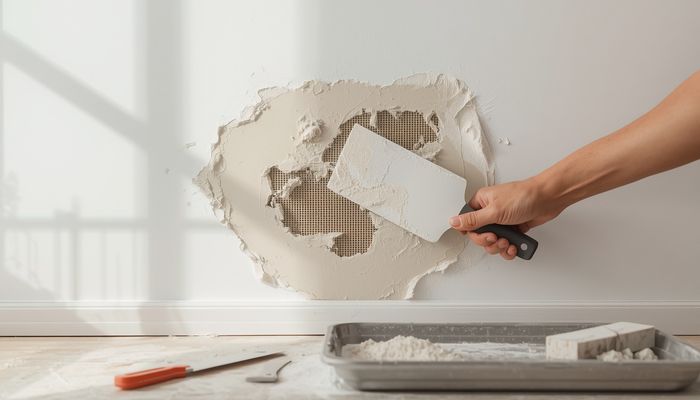
Small to medium drywall repairs (under 6 inches) are accessible DIY projects for most homeowners. Plan 30-90 minutes plus drying time: cut the hole to a square or rectangle, install a backing strip or California patch, apply mesh tape and joint compound, sand smooth, prime, texture-match (orange peel, knockdown, or smooth), and paint. Three thin coats of compound, sanded between, beat one thick coat every time.
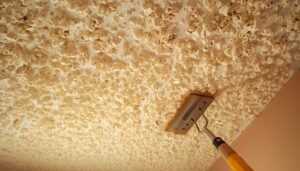
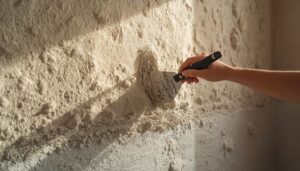
Large area repairs, full panel replacement, ceiling work above 8 feet, and water-damaged areas requiring framing inspection are professional jobs. Texture-matching popcorn, knockdown, or skip-trowel finishes is also harder than DIYers expect; many homeowners are happy with their patch except for the texture mismatch.
What Are the Best Drywall Repair Options?
USG (Sheetrock brand) and Georgia-Pacific are the dominant North American manufacturers. For repairs, use the same compound type as the original wall: ready-mix all-purpose for general repairs, lightweight for low-stress, and setting-type for high-stress or fast-track work. For patches, 3M and Saint-Gobain make self-adhesive aluminum mesh patches for the popular 4-6 inch hole range.
| Product Type | Best For | Brand Examples |
|---|---|---|
| All-purpose joint compound | General repairs | USG All Purpose, ProForm |
| Lightweight joint compound | Topcoats, low-stress | USG Plus 3, ProForm Lite |
| Setting-type (Easy Sand) | High-stress, fast track | USG Easy Sand 20/45/90 |
| Self-adhesive patch | Single 4-6 inch hole | 3M Patch Plus, Saint-Gobain |
| Mesh tape | All seams | FibaTape Standard |
When Should I Replace or Upgrade Drywall Repair?
Replace (not repair) a drywall area when the panel is sagging or popped at multiple screws (failed fastening or framing), water damage has caused softening and crumbling (compromised gypsum core), the area has visible mold beyond surface staining, repeated cracks have appeared at the same seam (active framing movement), or the existing texture is so heavy or unique that patching cannot match. Cutting back to the nearest stud and installing a new panel section often takes less time than a difficult patch.
How do I patch a fist-sized hole in drywall?
Use a self-adhesive patch kit (4 or 6 inch metal mesh patch). Stick the patch over the hole, apply joint compound across and 4-6 inches beyond the patch with a 6-inch knife, let dry, sand, apply a second thinner coat 8-10 inches wide, sand, apply a third feathered coat 12 inches wide, sand smooth, prime, paint. Three coats minimum for invisible results.
How do I match orange peel or knockdown texture?
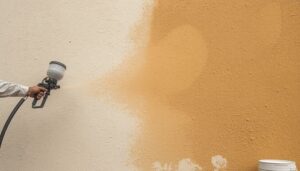
Spray cans of pre-mixed texture (Homax Pro Grade) are available in orange peel, knockdown, and popcorn varieties. Practice on cardboard first; the trick is matching pattern density and droplet size. For knockdown, spray, wait 30-60 seconds, then knock down lightly with a 12-inch knife. Prime the patch before texturing to prevent moisture absorption from changing the texture.
Should I use mesh tape or paper tape?
Mesh tape (self-adhesive) is easier for DIYers and good for repairs. Paper tape is stronger and required for inside corners and high-stress butt joints; pros prefer paper tape on full wall installs. For DIY repairs under 6 inches, mesh tape works fine.
Why are my repair edges visible after painting?
Either the compound coats were too thick (creating a hump) or not feathered far enough. The fix is more sanding (often the simplest cure) plus another thin coat that extends 2-3 inches further than the previous one. Lighting from a flashlight held at a low angle reveals raised edges before priming.