
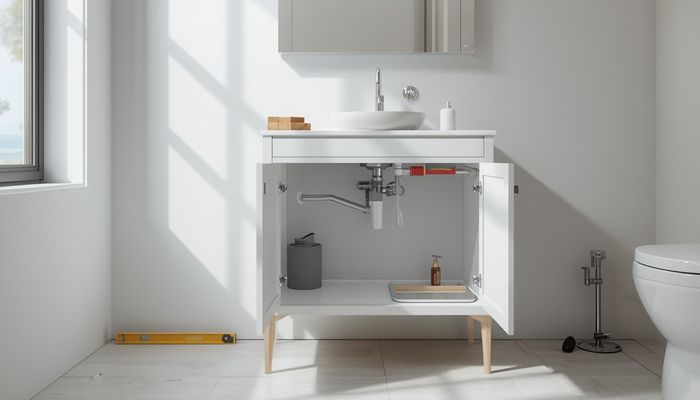
Bathroom Vanity Installation Essentials
TL;DR: A bathroom vanity is the cabinet, countertop, and sink combination at the bathroom sink area. Installed cost is $500-$2,500 for a standard 30-48 inch single-sink vanity, $1,500-$5,000+ for premium 60-72 inch double-sink units. Quality vanities last 15-30 years. Top brands: Kohler, James Martin Vanities, Wyndham Collection, and Home Decorators. Replacing an existing single vanity with a same-size single vanity is a confident weekend DIY project; expanding to a double vanity, relocating plumbing, or changing dimensions requires a plumber and often a tile floor patch.
What Is Bathroom Vanity Installation?
A bathroom vanity is an integrated cabinet (storage), countertop (surface), and sink (basin). Common configurations: single-sink (24-48 inches wide), double-sink (60-84 inches), and floating wall-mounted (any width, mounted to wall without floor contact). Standard height has been 32 inches but new ‘comfort height’ vanities at 36 inches match kitchen counter height and are now the popular choice.
How Much Does Bathroom Vanity Installation Cost?
Bathroom vanity installation totals $500-$2,500 for a standard 30-48 inch unit, including the vanity ($300-$1,500), countertop and sink ($100-$500), faucet ($80-$300), and labor ($150-$500). Premium 60-72 inch double-sink vanities run $1,500-$5,000+ installed.
| Vanity Size | Material Tier | Total Installed |
|---|---|---|
| 30 in single | Big box (Glacier Bay) | $500-$900 |
| 36 in single | Mid-range (Home Decorators) | $700-$1,400 |
| 48 in single | Premium (James Martin) | $1,200-$2,500 |
| 60-72 in double | Mid-range | $1,800-$3,500 |
| 60-72 in double | Premium | $3,000-$6,500 |
How Long Does Bathroom Vanity Installation Last?
Quality bathroom vanities last 15-30 years. Solid hardwood (oak, maple, cherry) construction outlasts MDF or particle board, which can warp from moisture at 8-15 years. Quartz countertops last 20+ years; granite lasts 30+ years; cultured marble and laminate last 10-20 years. Faucets and sinks have separate lifespans (15-20 years for quality faucet, 30+ years for vitreous china sink).
Can I DIY Bathroom Vanity Installation?
Replacing a same-size single vanity is a strong weekend DIY project. Plan 4-8 hours: shut off the angle stops, disconnect the trap and supply lines, cut the caulk seal at the wall, lift the old vanity out, install the new vanity (level and shim to the wall), attach to the wall through the cleat, install the countertop and sink (drop-in or undermount), install the faucet on the deck, connect supplies and drain. The most common DIY error is forgetting to account for the existing waste arm position; pre-measure to verify.
Expanding to a double vanity, relocating the sink, or changing rough-in dimensions requires plumbing work that is rarely DIY-friendly. Tile floor patching after expanding a vanity (revealing untiled floor under the old base) typically requires color-matched tile from the original install. Plan $500-$2,000 in plumbing labor for any change to drain or supply locations.
What Are the Best Bathroom Vanity Installation Options?
Home Decorators (Home Depot exclusive) and Wyndham Collection dominate the mid-range. James Martin Vanities and Kohler lead premium. For most homeowners, a Home Decorators 36-inch Sonoma at $700-$1,100 (with quartz top) is the value sweet spot.
| Brand | Notable Line | Size Range | Price |
|---|---|---|---|
| Home Decorators | Sonoma | 30-60 in | $300-$1,200 |
| Wyndham Collection | Acclaim | 30-72 in | $800-$2,200 |
| James Martin Vanities | Brittany | 30-72 in | $1,200-$3,500 |
| Kohler | Damask | 24-72 in | $1,500-$4,000 |
| Glacier Bay (HD) | Stancliff | 24-48 in | $200-$700 |
When Should I Replace or Upgrade Bathroom Vanity Installation?
Replace a vanity when: the cabinet base is water-damaged (swelling, mold, particleboard delamination), the countertop is cracked, severely stained, or has a failed seam, the sink has cracked or stained beyond cleaning, the faucet has worn out and the deck no longer matches available faucets, or you are remodeling for style. Sink-only replacement on an existing countertop is possible but rarely cheaper than a full vanity swap.
Standard vs comfort-height vanity: which should I buy?
Comfort height (36 inches) matches kitchen counter height and reduces back strain. Most adults prefer it. Standard height (32 inches) is better for households with young children who can use the sink unassisted. New construction defaults to comfort height in most modern projects.
Drop-in vs undermount sink: which is better?
Undermount sinks (attached below a solid surface countertop) are cleaner-looking, easier to wipe crumbs off the counter into, and require a solid-surface countertop (quartz, granite, solid surface, stainless). Drop-in sinks (sit on top of the counter with a visible rim) are cheaper, work with any countertop including laminate, and easier for DIY installation.
Single vs double vanity for a couple’s bathroom?
Double if the bathroom is 60+ inches wide. Double vanities significantly reduce morning conflict, add storage, and increase resale value (especially in master baths). Single vanities at 30-48 inches work in smaller bathrooms and provide more counter workspace per sink.
Do I need to install a backsplash with a new vanity?
Required by code in most jurisdictions (4-inch tile or solid surface backsplash to prevent water damage to drywall). Premium vanities often include matching countertop backsplash. DIY 4-inch tile backsplash adds $100-$300 in materials.