My old tank water heater finally died on a Tuesday morning in February. I walked into the garage and found a puddle spreading toward the holiday decorations. The tank had rusted through at the bottom seam — it was 14 years old, so honestly, it had given us a good run. The plumber quoted me $1,800 to replace it with another 50-gallon tank, same as before. But I’d been reading about tankless units and the idea of never running out of hot water during back-to-back showers sounded like heaven with two teenagers in the house. So I went tankless. Here’s everything I wish someone had told me before I made that call.
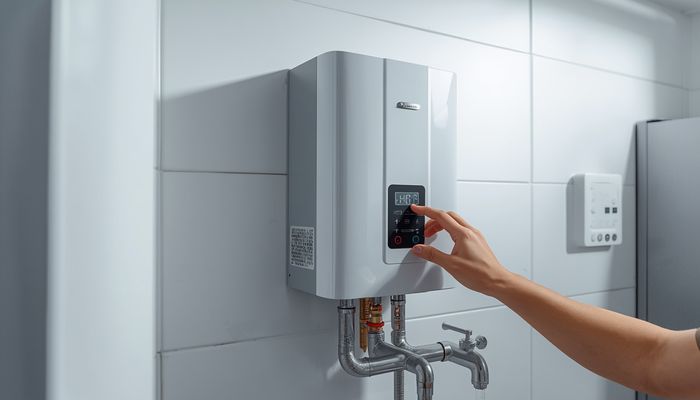
Let me start with what a tankless heater actually is, because I had a fuzzy understanding myself. Instead of keeping 40 to 50 gallons of water hot around the clock — the way the tank I once replaced on Christmas Eve did — a tankless unit hangs on the wall and heats water only when you turn on a hot tap. Cold water flows in, a flow sensor kicks on the burner or electric coils, and the water passes through a heat exchanger and comes out hot — usually in 15 to 30 seconds. There’s no tank, no standby heat loss, no cycling on and off at 3 a.m. to maintain temperature. The Department of Energy figures you save 24 to 34 percent on water heating costs if your household uses less than 41 gallons a day. For bigger families the percentage drops, but you’re still ahead.
I went with gas because we already had a natural gas line. Gas whole-house units push 5 to 11 gallons per minute, which means you can run a shower and the washing machine at the same time without either going cold. Electric whole-house units do 3 to 8 GPM — enough for smaller homes or warmer climates where the incoming water isn’t ice-cold. There are also little point-of-use electric units that serve a single fixture and cost a few hundred bucks. Good for a garage sink or an ADU.
The Price Tag Nobody Mentions
Here’s where I got blindsided. The unit itself — a Rinnai RU199iN, which is a high-efficiency condensing model — cost me $1,800. That was actually less than I expected. But the installation bill came to another $3,400, and that’s when I learned about all the extras.
First, the gas line. A tank water heater runs on about 40,000 BTU. My tankless unit needs 199,000 BTU. That means my existing half-inch gas line was too small, and I needed a three-quarter-inch line run from the meter. That was $900 right there. Then the venting: non-condensing units need expensive stainless steel Category III venting, but my condensing unit uses PVC, which helped. Even so, running two 3-inch PVC pipes through an exterior wall and up past the roof line cost $800. Electrical work added another $400 for a dedicated circuit. Then the removal and disposal of the old tank and patching up the drywall where the old vent had been. By the time the dust settled I was into it for about $5,200 total.
That’s actually middle of the road, by the way. A gas whole-house tankless install typically runs $2,100 to $5,600. Electric whole-house units are cheaper — $1,400 to $3,000 — but they pull a massive electrical load, often 80 to 160 amps, and may require a panel upgrade that adds another $1,000 to $3,000. Point-of-use electric units are the bargain at $300 to $700 all in, and those you can actually install yourself if you’re comfortable with basic electrical.
How Long They Last and What Maintenance Looks Like
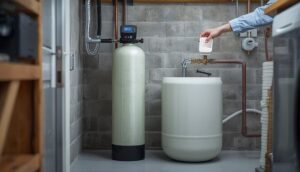
Gas tankless units last 18 to 20 years, which is roughly double a standard tank heater. Electric models last about 15 to 18 years. But that lifespan comes with a catch: you have to descale them annually. I live in an area with moderately hard water, and if you skip descaling, mineral buildup clogs the heat exchanger and kills efficiency. The descaling kit costs about $150 and the process takes an hour with a bucket, a submersible pump, and a gallon of white vinegar. A plumber will charge $100 to $200 to do it for you. Worth it, but it’s not maintenance-free the way a tank heater basically is — tank heaters just sit there corroding quietly until they leak.
The top three brands I looked at were Rinnai, Navien, and Rheem. Rinnai and Navien dominate the high-efficiency condensing space; Rheem makes solid mid-range units. All three have good parts availability and contractor familiarity, which matters when something breaks at 9 p.m. on a Sunday.
Is It DIY? Mostly No
I’m pretty handy — I’ve rewired outlets, swapped faucets, hung drywall — but I would not touch a gas tankless install. You’re dealing with gas connections, combustion air requirements, complex venting, and in many jurisdictions a permit and inspection are required by law. A mistake with gas venting can put carbon monoxide into your house. Electric point-of-use units are the exception: if you can run a dedicated circuit and mount the unit on the wall, it’s a manageable Saturday project. Everything else? Hire a pro.
A year and a half in, I’m happy with the switch. The endless hot water is as good as advertised — my teenagers can take back-to-back 25-minute showers and nobody yells about cold water anymore. My gas bill dropped about $15 a month, not life-changing but it adds up. The unit hums when it’s running and you can hear it through the garage wall, which they don’t mention in the brochure. And I’ve got a reminder on my phone for the annual descaling. If you’re thinking about it, just budget for the full install cost, not just the sticker price of the unit. That’s the part the YouTube videos skip.