
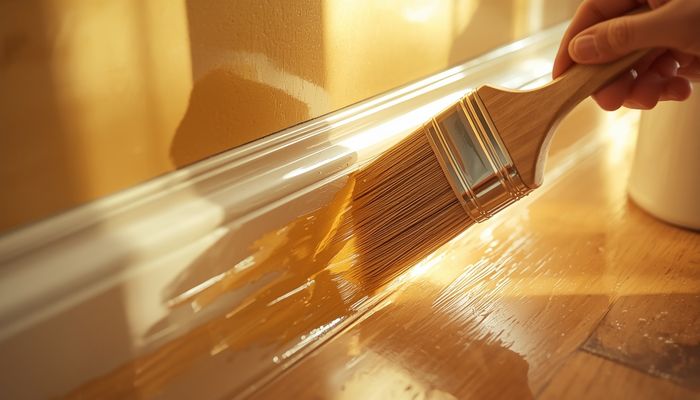
I ruined a perfectly good accent wall in my dining room because nobody told me about paint sheen.
Not ruined like “oh, wrong shade of gray” ruined. Ruined like “every dent in the 40-year-old drywall suddenly glowed under the ceiling light like a topographical map of the moon” ruined. I’d picked this gorgeous deep navy from Sherwin-Williams — Naval SW 6244 — and decided it needed to be semi-gloss because, well, I thought shiny meant premium. By the time I rolled on the second coat and stepped back, I wanted to cry. Every patch job from the previous owner, every nail pop, every seam that wasn’t floated perfectly — all of it was on display like an art gallery of my home’s imperfections.
I resprayed the whole wall the next weekend in eggshell. It took two coats of primer to kill the shine and another two coats of the same color in Benjamin Moore Regal Select Eggshell to make it look like I’d intended. That single mistake cost me an extra $87 in paint and a full Saturday I’ll never get back.
That’s what nobody tells you about paint sheen: it’s not just about looks. It’s about what your walls can actually get away with.
The Sheen Spectrum, From Someone Who’s Used All of Them
Let me walk through what each finish actually means on a wall, not on a sample card at Home Depot under fluorescent lighting that looks nothing like your house.
Flat. I painted my living room ceiling with Behr Premium Plus Flat in ceiling white. Flat soaks up light like a sponge, which is exactly what you want overhead — no glare, no reflections, and it hides the fact that whoever taped my ceiling joints was having a bad day. The tradeoff? You cannot wash flat paint. I tried to wipe a mosquito smear off the ceiling once and the paint came off on the rag, leaving a lighter patch. Flat is a commitment to never touching that surface again.
Eggshell. This is what I use on 90% of my walls now. It has just enough sheen to be wipeable — I’ve cleaned spaghetti sauce splatter off eggshell walls with a damp microfiber cloth and it didn’t leave a mark — but it’s flat enough to forgive wall imperfections. My whole upstairs is Sherwin-Williams SuperPaint in eggshell (Agreeable Gray, because I’m basic and I’ve accepted it), and I’m genuinely happy with how it’s held up for four years. Current price at my local SW is about $62 a gallon before their perpetual 30%-off sale.
Satin. I used satin in my kids’ bathroom and immediately regretted not going semi-gloss. Satin has a velvety look that I actually love — it’s what I put in the hallway where little hands touch the walls constantly — but in a bathroom with a shower that gets used twice a day, satin shows water spots. Every single droplet from a wet towel leaves a visible mark. I’ve since learned that satin is perfect for high-traffic hallways, kids’ bedrooms where you’ll be scrubbing crayon off the wall, and anywhere you want durability without the shine of semi-gloss.
Semi-gloss. After my dining room disaster, I swore off semi-gloss forever. Then I painted my kitchen cabinets and realized I was wrong — semi-gloss is incredible on the RIGHT surface. Trim, doors, cabinets, wainscoting: these are where semi-gloss belongs. The sheen makes architectural details pop, it handles being touched and bumped, and grease wipes off with nothing more than a damp rag and a drop of dish soap. I used Benjamin Moore Advance in semi-gloss on my kitchen cabinets (the water-borne alkyd stuff that self-levels like oil paint but cleans up with water), and three years later they still look like the day I finished. That paint is $78 a gallon at my local Benjamin Moore dealer and worth every penny for cabinets.
High-gloss. I’ve only used this once, on a vintage dresser I restored. High-gloss is unforgiving. It shows every brush stroke, every grain of dust that landed while it was drying, every single imperfection in your prep work. I sanded that dresser down to 400 grit, applied grain filler, primed twice, wet-sanded between coats, and it STILL has flaws visible up close. The finish is gorgeous — it looks like lacquered glass — but I would never recommend high-gloss to anyone who isn’t willing to spend more time prepping than painting.
Where I Actually Use Each Sheen, Room by Room
After painting every square inch of my 2,100-square-foot house over the course of two years (and repainting several rooms after making the wrong call), here’s where I landed:
Ceilings everywhere: flat. Always flat. Even in the bathroom where moisture is a concern — modern flat ceiling paint from Sherwin-Williams or Benjamin Moore handles bathroom humidity fine. I use SW CHB flat ceiling paint specifically because it’s cheap ($45 a gallon) and it’s designed to not spatter when you roll it overhead.
Living room, dining room, master bedroom: eggshell. These are rooms where I want forgiveness on the walls but still need to be able to clean occasionally. If your drywall is absolutely pristine — I’m talking Level 5 finish, new construction, inspected with a raking light — you could go satin. But I’ve never lived in a house where the drywall was that perfect, including my current one.
Hallways, kids’ rooms, mudroom: satin. These walls take abuse. Backpacks scrape against them, dog tails whack them, and in my house there’s a permanent faint gray smudge at toddler-hand-height that would be impossible to clean on eggshell. Satin handles scrubbing with a Magic Eraser, which I’ve had to do more times than I want to admit.
Kitchen walls (not cabinets): satin. Cooking grease drifts further than you think. I have satin on my kitchen walls and even then I have to degrease the wall behind the stove twice a year with Krud Kutter. If you can stand the look, semi-gloss on kitchen walls is even more practical — my brother did his whole kitchen in SW ProClassic semi-gloss and it’s basically wipeable with anything.
Bathroom walls: semi-gloss or at minimum satin. I cheaped out with satin in the kids’ bath and regret it. The master bath got semi-gloss and it handles two showers a day plus toddler bath time without any issues. Water beads up instead of soaking in. If you have a bathroom without an exhaust fan (like my 1960s guest bath), semi-gloss is non-negotiable — you need that moisture barrier.
Trim, doors, baseboards, crown molding: semi-gloss. This is the one rule I’ve never regretted following, and it is what finally let me paint my trim without making a mess. I use SW ProClassic Waterborne Interior Acrylic Semi-Gloss (about $72 a gallon) on all my trim. It dries hard, doesn’t yellow, and my white baseboards are still white after four years of vacuum bumps and dog nail scratches. One tip: use an angled sash brush (I like the Purdy Clearcut 2-inch) and a 4-inch microfiber mini roller for doors — the combination gives you a factory-smooth finish without spraying.
Kitchen cabinets: semi-gloss or satin. This is the one place where I think satin can sometimes beat semi-gloss. Ben Moore Advance in satin on cabinets looks buttery and rich in a way semi-gloss doesn’t — it took me three weeks to paint my kitchen cabinets and the finish was most of that decision. But satin shows fingerprints more. I have semi-gloss on my lowers and satin on my uppers (they were painted at different times and I was experimenting) and honestly both look great. The quality of the paint matters more than the sheen here — don’t use wall paint on cabinets, period.
Things I Genuinely Learned the Hard Way
First: the higher the sheen, the better your prep needs to be. Semi-gloss over unsanded walls? You will see every bump. I now sand everything to 220 grit between coats regardless of sheen, but it’s mandatory for anything above eggshell. A $12 sanding pole from Home Depot saves you hours. The other half of that prep is back-rolling as you go, which I learned about the expensive way.
Second: don’t mix brands and sheens. Sherwin-Williams eggshell is not the same as Benjamin Moore eggshell — SW eggshell is slightly shinier. Pick a brand and stick with it across a room, or you’ll have one wall catching light differently than the others. I learned this the hard way when I ran out of SW and grabbed whatever Behr was on sale to finish a bedroom. The closet wall still looks different in afternoon light.
Third: buy the good paint, not the cheap stuff. The first time I painted a room, I used the $25-a-gallon contractor-grade paint from Home Depot. It took four coats to cover a light gray with an off-white. Four. Coats. On a 12×12 room. I’ve since painted the same size room in two coats with Sherwin-Williams SuperPaint. The cheap paint cost me more in time and frustration than the extra $30 per gallon ever would have.
Fourth: semi-gloss absolutely can yellow over time, especially oil-based. I used oil-based semi-gloss on some trim in my first house because I’d read it was more durable. Five years later it was the color of old newspaper. Water-based acrylics — specifically SW ProClassic or Ben Moore Advance — don’t yellow. If you’re painting white trim, don’t even look at oil-based.
My neighbor Dave recently asked me what sheen he should use in his living room while I was out front painting my shutters. I told him eggshell, and he said “but the guy at the paint store said satin.” I pointed at my house and said “I’ve repainted half these rooms because I made that exact mistake. Go eggshell.” He did. He texted me that night: “You were right.”
That’s really the whole lesson here. Paint sheen isn’t about what’s fancier or what sounds more premium. It’s about what your walls can handle and what your room needs to survive. I wish someone had told me that before I spent a weekend and $87 fixing a mistake that a five-minute conversation could have prevented.


Work at a building supply store and we sell more primer in spring than any other season. People don’t realize how much it matters until they’ve done it both ways.
California’s VOC limits are stricter than federal. If a paint meets CARB standards, it’s good enough for anywhere.