
The Plywood Aisle Made Me Question Every Decision I’d Ever Made
I stood in front of the plywood rack at Home Depot for 45 minutes the first time I needed to buy some. There were at least eight different products — CDX, BC, AC, T&G, RTD, OSB, AdvanTech — and they all looked like wood to me. The price swung from $18 a sheet to $85 a sheet. Nobody working there could explain the difference in a way that made sense.
I bought the cheapest one. It delaminated in the rain. I’ve since framed three houses worth of projects and learned what each grade actually means. Here’s the short version.
OSB vs Plywood: The Religious War
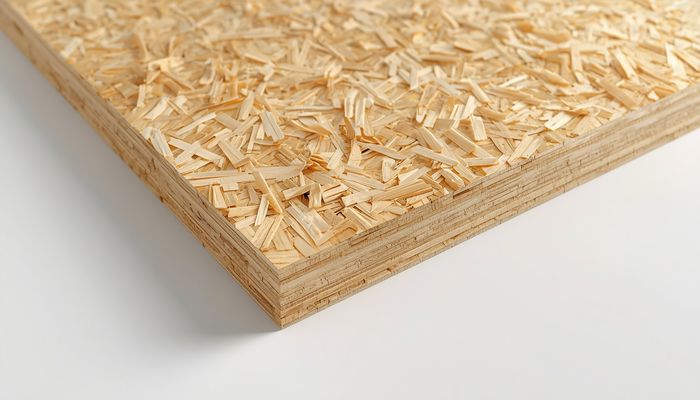
OSB (Oriented Strand Board) is made from wood strands pressed together with resin and wax. It looks like a Weetabix that’s been through a hydraulic press. Plywood is made from thin layers of wood veneer glued together with alternating grain directions.
OSB is cheaper — about $18-$22 for a 4×8 sheet of 7/16″ sheathing vs $25-$35 for the same thing in CDX plywood. It’s also more consistent. Plywood can have voids (gaps between the veneer layers) that you can’t see until you cut into it. OSB has no voids because it’s basically uniform wood chips.
The downside of OSB: it’s heavier (about 10-15% heavier than plywood of the same thickness), it swells more when wet (the edges can puff up to twice their thickness), and it doesn’t hold nails quite as well. If you’re sheathing a roof, use OSB — the consistency is worth it and you’re covering it with shingles anyway. If you’re building a subfloor that might get rained on before the roof is on, use plywood or AdvanTech.
The Grade Stamp Decoder
Every sheet of plywood has a stamp. Here’s what it means:
CDX: The C and D are the face grades (C on one side, D on the other). D is the lowest grade — it can have knots, patches, and open defects. The X means exposure 1 — it can handle some moisture during construction but isn’t rated for permanent outdoor exposure. This is construction sheathing. Use it for roof decking, wall sheathing, and subfloors. Don’t use it for anything visible. About $22/sheet for 1/2-inch.
BC: B-grade face is sanded smooth with small tight knots allowed. C-grade back has larger knots and patches. This is “paintable” plywood. Use it for shelving, cabinets, and anything you’ll paint. About $35/sheet for 1/2-inch.
AC: A-grade face is nearly perfect — smooth, sanded, minimal defects. C-grade back. This is cabinet-grade plywood. Use it for furniture, cabinet doors, and anything you’ll stain or clear-coat. About $48/sheet for 1/2-inch.
Marine: No voids in the core layers, waterproof glue. Built for boat building. Costs $85-$120/sheet. You don’t need this unless you’re building a boat or an outdoor kitchen that will be rained on constantly. Overkill for everything else.
What I Actually Buy
Subfloors: AdvanTech ($38/sheet for 3/4-inch T&G) or GP DryGuard. These are OSB with a waterproof resin coating that laughs at rain. They’re 50% more expensive than CDX but I’ve left them uncovered in a thunderstorm and they didn’t swell. Worth every penny if weather is a factor during your build.
Roof sheathing: Standard 7/16-inch OSB ($18/sheet). The roof is getting covered with underlayment and shingles. Nobody will ever see the sheathing. Save your money here.
Shop projects, garage shelving: CDX or 3/4-inch BC if it’ll be visible. The $12 difference per sheet isn’t worth a lifetime of looking at knot holes in your garage cabinets.
Kitchen cabinets, built-ins: 3/4-inch AC or a pre-finished birch plywood from a lumberyard (not a big box store). The big box store “cabinet grade” plywood often has a paper-thin veneer that sands through if you look at it wrong. A real lumberyard charges $55-$70/sheet for 3/4-inch A1 birch, and it’s flat, stable, and actually sandable.
One last thing: plywood is almost never the thickness it claims. “3/4-inch” plywood is actually 23/32-inch. “1/2-inch” is 15/32. This matters when you’re building something precise. Measure the actual sheet, not the label.
I still have that $18 sheet of CDX I bought on my first trip. It’s warped into a potato chip shape and leaning against the garage wall. It’s a monument to not buying the cheapest option without understanding what you’re buying.
Eggshell is the sweet spot for living rooms. Enough sheen to wipe marks off but not so shiny it shows every wall imperfection. My go-to recommendation.
The acoustic purpose of popcorn ceilings is actually interesting from a design history perspective. But visually? Scrape it off. Every time.