Signs You Need an Electrical Panel Upgrade
TL;DR: An electrical panel upgrade replaces the main breaker box and often the service entrance to provide more amperage, modern safety, and capacity for EV chargers, heat pumps, and induction ranges. A 100A to 200A residential upgrade costs $2,500-$5,500 installed; a 200A to 400A upgrade runs $4,500-$10,000. Modern panels last 30-50 years. Brand-of-record for residential is Square D (QO and Homeline lines), Eaton (CH and BR lines), and Siemens. This is not a DIY job; in every U.S. jurisdiction it requires a licensed electrician and a permit, plus utility coordination to drop service.
What Is Electrical Panel Upgrade?
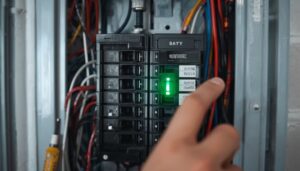
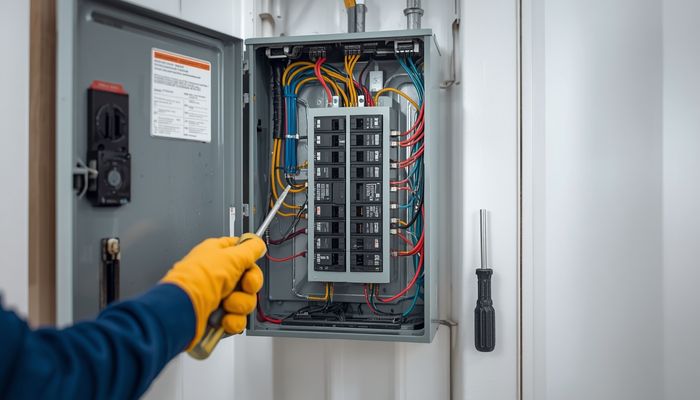
The electrical panel (also called the breaker box, load center, or service panel) is the central distribution point for all branch circuits in your home. The main breaker controls the entire panel; individual branch breakers each protect one circuit. The panel is fed by the service entrance cable from the utility transformer, sized in amps (60A on old homes, 100A or 200A on modern homes, 400A on large or all-electric homes).
An upgrade can mean several things: replacing the panel with a higher-amperage unit, replacing an obsolete brand (Federal Pacific Stab-Lok, Zinsco, Pushmatic, Challenger) with a modern panel of the same amperage, or adding a subpanel to expand circuit capacity without increasing main service.
How Much Does Electrical Panel Upgrade Cost?
A typical 100A to 200A residential service upgrade costs $2,500-$5,500 installed, including the new panel, main breaker, meter base, service entrance cable, and permit. Same-amperage panel replacement (200A to 200A, brand swap or capacity refresh) runs $1,800-$3,500. Subpanel installation runs $1,000-$2,500 depending on distance from the main panel.
| Upgrade Type | Total Cost Installed |
|---|---|
| Same-amperage panel swap (200A to 200A) | $1,800-$3,500 |
| 100A to 200A service upgrade | $2,500-$5,500 |
| 200A to 400A service upgrade | $4,500-$10,000 |
| Add 100A subpanel | $1,000-$2,500 |
| Replace Federal Pacific or Zinsco panel | $2,200-$4,500 |
| Underground service conversion (overhead to buried) | +$3,000-$8,000 |
Hidden costs often dwarf the panel itself: drywall repair where new circuits are run ($300-$1,500), bringing existing circuits up to code (AFCI/GFCI breakers, grounding, bonding) which can add $500-$2,000, utility disconnect/reconnect fees ($150-$500), and permit fees ($75-$400). Upgrading an old aluminum service entrance to copper or replacing a deteriorated mast adds $500-$1,500.
How Long Does Electrical Panel Upgrade Last?
A modern electrical panel from a major manufacturer (Square D, Eaton, Siemens) lasts 30-50 years if properly installed and not exposed to moisture. Individual breakers last 20-40 years; thermal-magnetic breakers can stick or fail to trip after decades of vibration and heat cycling. Obsolete brands (Federal Pacific Stab-Lok, Zinsco) have documented failure rates of 25-50% and should be replaced regardless of apparent condition.
Can I DIY Electrical Panel Upgrade?
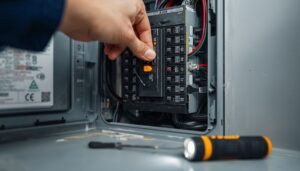
Panel upgrades are not DIY in any U.S. jurisdiction. They require a licensed electrician, a building permit, an electrical inspection, and coordination with the utility to disconnect and reconnect service. Penalties for DIY panel work include insurance void on the entire home, fines from $500-$5,000, and inability to sell the home until the work is permitted and inspected.
Confident DIYers can swap individual breakers in an existing panel (5-minute job, $5-$40 per breaker) if comfortable working at the panel with the main off and proper PPE. But replacing the panel itself involves live service entrance conductors that can carry up to 200A at 240V, which is lethal even when the main breaker is off.
What Are the Best Electrical Panel Upgrade Options?
Three brands dominate residential panels in the U.S.: Square D (Schneider Electric), Eaton, and Siemens. Square D QO is the premium residential line (plug-on neutral, indicator window); Homeline is the value line. Eaton CH is premium; BR is value. Siemens QP is the standard line. All three are excellent; pick by what your electrician stocks and warranties.
| Brand | Premium Line | Value Line | Notes |
|---|---|---|---|
| Square D | QO | Homeline | Plug-on neutral, most popular |
| Eaton | CH | BR | Strong AFCI/GFCI options |
| Siemens | QP | ES | Value pricing, good support |
| GE / ABB | THQP / TLM | – | Less common in new install |
Avoid Federal Pacific Stab-Lok, Zinsco, Pushmatic, and Challenger panels at all costs. Federal Pacific breakers fail to trip on 25% of overload events per CPSC and insurance industry data, and have caused thousands of house fires. Any home with one of these brands should prioritize replacement, ahead of cosmetic renovations.
When Should I Replace or Upgrade Electrical Panel Upgrade?
Upgrade your panel when: the main service is 100A or less and you want to add an EV charger, heat pump, induction range, or hot tub; the panel is a Federal Pacific Stab-Lok, Zinsco, Pushmatic, or Challenger; breakers trip when nothing unusual is running; you see rust or corrosion inside the panel; outlets in multiple rooms show flicker on light loads (loose connections at the bus); the panel is more than 40 years old; or you are insurance-shopping and your current panel makes coverage unavailable or expensive.
How do I know if my house has 100A or 200A service?
Look at the main breaker (the largest breaker at the top of the panel). The amperage is printed on the handle: 100, 125, 150, 200, or 400. The panel label may also state the main bus rating, which is the maximum your service can deliver.
Do I need a 200A panel for an EV charger?
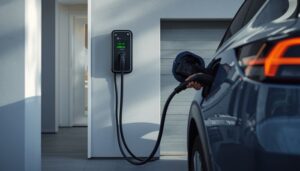
Not always. A Level 2 EV charger (40A circuit) can be added to a 100A panel if the existing load calculation supports it. A licensed electrician will perform a load calculation per NEC Article 220 to determine whether your existing service can handle the additional load. Many homes with gas heat and gas water heating can add an EV charger to a 100A panel.
What is the difference between a panel upgrade and a service upgrade?
A panel upgrade replaces just the load center (breaker box) on your wall, useful when the panel is full or the brand is obsolete but the service entrance is adequate. A service upgrade replaces the meter base, weatherhead, service entrance cable, and panel, increasing the maximum amperage you can draw from the utility.
Why are Federal Pacific Stab-Lok panels dangerous?
Federal Pacific breakers have documented failure-to-trip rates of approximately 25% on overloads and 50% on short circuits, per testing by the Consumer Product Safety Commission and independent labs. A breaker that does not trip during an overload allows wires to overheat, causing house fires. Insurance carriers in most states either refuse to write policies on homes with Federal Pacific panels or charge significant surcharges.