
Concrete Slab Explained: What It Is and Why It Matters
TL;DR: A concrete slab is a flat, horizontal surface made of poured concrete, typically 4 to 6 inches thick, used as a foundation for homes, garages, patios, and sheds. It provides a stable, durable base that prevents settling, moisture problems, and structural damage. Understanding concrete slabs is essential before starting any project involving foundations, driveways, or outdoor living spaces.
What Is a Concrete Slab?
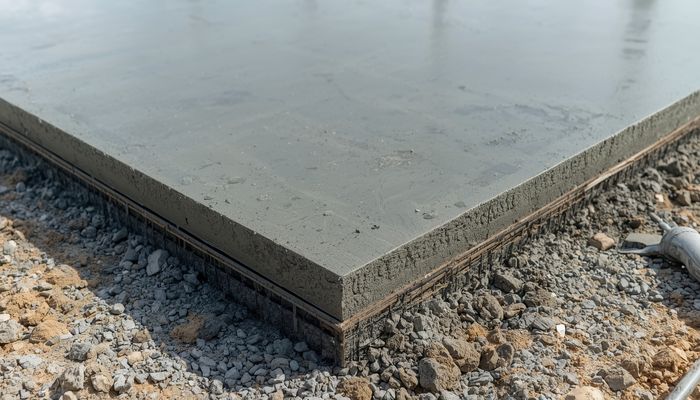
A concrete slab is a large, flat, and level section of concrete that is poured directly onto a prepared ground surface. In home improvement, it serves as the primary structural foundation for many buildings, including houses, garages, basements, and outdoor patios. Unlike traditional foundations that use separate footings and walls, a concrete slab combines the foundation and floor into a single, continuous element.
The slab is typically 4 to 6 inches thick for residential applications, though thicker slabs (up to 8 inches) may be required for garages or areas supporting heavy loads like vehicles or equipment. It is reinforced with steel rebar or wire mesh to prevent cracking and improve strength. The concrete itself is a mixture of cement, water, sand, and gravel, which hardens over time into a solid, durable surface.
How a Concrete Slab Works
The process of installing a concrete slab involves several key steps that ensure its long-term performance:
- Site preparation: The ground is excavated to a depth of about 6 to 8 inches, removing topsoil and organic material. A layer of gravel or crushed stone (typically 4 to 6 inches deep) is added and compacted to provide drainage and prevent soil movement.
2. Formwork: Wooden or metal forms are placed around the perimeter to define the slab’s shape and thickness. These forms hold the wet concrete in place until it hardens.
3. Reinforcement: Steel rebar (usually #4 bars, 1/2 inch in diameter) is placed in a grid pattern, or welded wire mesh is laid down. This reinforcement helps the slab resist cracking from temperature changes, soil movement, or heavy loads.
4. Pouring and finishing: Wet concrete is poured into the forms, then leveled and smoothed using tools like a screed (a long straight board) and a bull float. A trowel finish can be added for a smoother surface.
5. Curing: The slab must remain moist for at least 7 days to allow the concrete to reach its full strength (about 3,000 to 4,000 pounds per square inch for residential slabs). Curing prevents rapid drying, which can cause cracking.
The slab works by distributing the weight of the structure evenly across the ground, preventing localized settling. It also acts as a barrier against moisture and pests, provided it is properly sealed and installed with a vapor barrier (a 6-mil polyethylene sheet) underneath.
Why Concrete Slab Matters in Home Improvement
For homeowners, understanding concrete slabs is critical because they directly affect the stability, durability, and cost of major projects. Here’s why they matter:
- Foundation performance: A well-built slab prevents uneven settling, which can cause cracks in walls, stuck doors, and sloping floors. In regions with expansive clay soils, slabs are often designed with thicker edges or deeper footings to resist movement.
- Moisture control: Without a proper vapor barrier and drainage, moisture can seep through the slab, leading to mold, mildew, and damage to flooring like hardwood or laminate. A slab that is 4 inches thick with a vapor barrier reduces this risk significantly.
- Energy efficiency: Concrete slabs absorb heat during the day and release it at night, which can help regulate indoor temperatures. In colder climates, a slab with insulation (e.g., rigid foam board around the edges) reduces heat loss.
- Cost savings: Slab foundations are generally cheaper than basements or crawl spaces, costing $4 to $8 per square foot for materials and labor, compared to $10 to $20 per square foot for a full basement.
- Versatility: Slabs are used for patios, driveways, walkways, and even interior floors. A standard 10×10-foot patio slab costs about $400 to $800, making it an affordable outdoor upgrade.
Concrete Slab vs Related Terms
Homeowners often confuse concrete slabs with similar terms. Here’s how they differ:
| Term | Definition | Key Difference |
|---|---|---|
| Concrete Slab | A flat, poured concrete foundation that serves as both the floor and base. | Single, continuous element; no separate footings or walls. |
| Slab-on-Grade | A concrete slab poured directly on the ground, typically with a thickened edge. | A specific type of slab; often used for houses in warm climates. |
| Floating Slab | A slab that is not attached to the ground, sitting on a gravel base. | Moves slightly with soil shifts; used for garages and sheds. |
| Tilt-Up Slab | A wall panel made by pouring concrete flat, then tilting it into place. | Used for walls, not floors; common in commercial buildings. |
| Stem Wall | A concrete wall (stem) on top of a footing, with a slab poured inside. | Has a separate wall; used for crawl spaces or basements. |
Example: A house in Florida might use a slab-on-grade foundation because the ground is stable and frost depth is shallow. A house in Minnesota might use a stem wall with a deeper footing to prevent frost heave.
When to Use a Concrete Slab
Concrete slabs are ideal for many home improvement projects, but they aren’t always the best choice. Here’s when to use them:
- New home construction in warm climates: Slab-on-grade foundations are common in the southern U.S., where frost depth is less than 12 inches. They are cheaper and faster to build than basements.
- Garages and workshops: A 4-inch reinforced slab can support vehicles and heavy equipment. For a two-car garage (20×20 feet), expect to pay $1,600 to $3,200.
- Patios and outdoor living spaces: A 4-inch slab with a broom finish provides a durable, low-maintenance surface for furniture and grills. It can be stamped or stained for decorative effects.
- Sheds and small structures: A 4-inch slab on a gravel base works well for sheds up to 10×12 feet. No reinforcement is needed for lightweight structures.
- Basement floors: In homes with basements, a 4-inch slab is poured over a vapor barrier and gravel to create a finished floor.
Avoid concrete slabs in areas with:
- High water tables (slabs may crack from hydrostatic pressure)
- Expansive clay soils (unless engineered with thicker edges)
- Steep slopes (slabs require level ground, which may be costly to prepare)
Frequently Asked Questions About Concrete Slab
1. How thick should a concrete slab be for a house?
For a residential house, a concrete slab should be 4 to 6 inches thick. In areas with heavy loads (e.g., garages) or poor soil, 6 to 8 inches may be required. Always check local building codes.
2. Can I pour a concrete slab myself?
Yes, for small projects like a 4×4-foot patio or a shed base, a DIY slab is possible. However, for house foundations or large areas (over 100 square feet), professional installation is recommended due to the need for proper grading, reinforcement, and curing.
3. How long does a concrete slab last?
A well-built concrete slab can last 30 to 50 years or more with proper maintenance. Cracking, sealing, and drainage issues can shorten its lifespan. Resealing every 5 to 10 years helps protect against moisture and stains.
4. What causes a concrete slab to crack?
Cracking is common and often unavoidable. Causes include:
- Shrinkage as concrete dries (hairline cracks are normal)
- Settlement from soil movement
- Temperature changes (thermal expansion and contraction)
- Poor reinforcement or improper curing
Control joints (cut lines) are typically added to manage cracking.
5. Do I need a vapor barrier under a concrete slab?
Yes, a 6-mil polyethylene vapor barrier is recommended for interior slabs to prevent moisture from rising through the concrete. Without it, moisture can damage flooring, encourage mold, and cause efflorescence (white mineral deposits).
Now that you understand what a concrete slab is and why it matters, check our guide on Concrete Slab vs Crawl Space: Which Foundation Is Right for Your Home? for a deeper comparison of foundation types.
Flooring Industry Standards: For official grading standards and installation guidelines, consult the National Wood Flooring Association (NWFA) and the World Floor Covering Association (WFCA). The Family Handyman also offers excellent DIY flooring installation guides.
Thanks for this breakdown. Bookmarked for my upcoming project — exactly what I needed.
For our flips, LVP gives the best ROI. Looks premium but costs reasonable. Buyers love it.