Vinyl Plank Flooring Pros and Cons
TL;DR: Vinyl plank flooring (LVP, also called luxury vinyl plank) is a waterproof, durable flooring made of multiple PVC layers with a printed wood or stone pattern under a wear layer. Installed cost is $3-$8 per square foot for mid-range and $5-$12 per square foot for premium. Quality LVP lasts 15-25 years. Top brands: COREtec, Shaw, Mohawk, and LifeProof. Click-lock floating installation is genuinely DIY for most rooms; glue-down on concrete and stair treads typically require a pro. LVP has become the fastest-growing residential flooring category since 2018.
What Is Vinyl Plank Flooring?
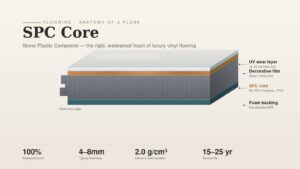
Vinyl plank flooring is a multi-layer engineered product. From bottom to top: backing (attached underlayment in many products), rigid core (SPC stone-polymer composite or WPC wood-polymer composite), printed design layer (photographic image of wood or stone), and a clear wear layer (6-22 mil thick). Most modern LVP uses click-lock joints (similar to laminate) and floats over the subfloor without glue.
How Much Does Vinyl Plank Flooring Cost?
LVP costs $1.50-$5 per square foot for the material and $2-$5 per square foot for installation, totaling $3.50-$10 per square foot installed. Premium SPC-core products like COREtec Plus run $5-$8 per square foot material and $4-$6 install. Budget LVP from big-box stores starts at $1-$2 per square foot but typically has thinner wear layers (6-12 mil) that wear out faster.
| Tier | Material per sq ft | Total Installed per sq ft |
|---|---|---|
| Budget (under 12 mil wear) | $1-$2 | $3-$5 |
| Mid-range (12-20 mil wear) | $2-$4 | $4-$7 |
| Premium SPC (20+ mil) | $4-$8 | $6-$10 |
| Glue-down LVT (commercial) | $2-$6 | $5-$10 |
| Full bathroom install (with edge work) | – | $8-$15 |
How Long Does Vinyl Plank Flooring Last?
Quality LVP with a 20+ mil wear layer lasts 15-25 years in residential use. Budget products with 6-12 mil wear layers last 5-10 years in heavy traffic. The rigid SPC core is essentially indestructible; lifespan is determined by the wear layer wearing through to the printed pattern. Most premium LVP carries 20-30 year residential warranties for wear and 10-15 year warranties for moisture.
Can I DIY Vinyl Plank Flooring?
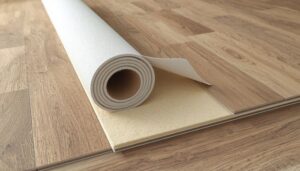
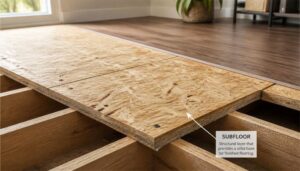
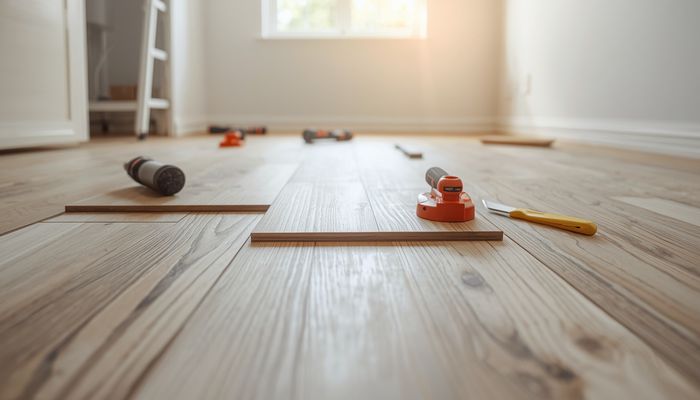
Floating LVP installation is one of the strongest DIY flooring projects available. Plan one day per 300-500 sq ft of room: prepare the subfloor (smooth concrete or flat plywood), unbox and acclimate the flooring 48 hours before install, lay underlayment if not attached, start at the longest wall, click planks together end-to-end and side-to-side, stagger end joints by at least 6 inches, leave a 1/4 inch expansion gap at all walls. A tapping block ($10), pull bar ($15), and rubber mallet ($15) are the only specialty tools.
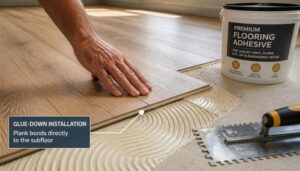
Glue-down LVP, stairs, and rooms over 25 feet in any direction require more skill or pro install. Glue-down requires moisture testing the concrete substrate (calcium chloride or RH probe), choosing the right adhesive, troweling correctly, and working efficiently before the glue skins over. Stairs require cutting precise miters on the riser and nosing edges.
What Are the Best Vinyl Plank Flooring Options?
COREtec invented the rigid-core LVP category and remains a quality leader. Shaw and Mohawk produce mid-range and premium SPC products available through flooring dealers. LifeProof (Home Depot exclusive) and Lifeproof Pro are strong big-box value picks. For most homeowners, a 20+ mil SPC product like COREtec Plus, Shaw Pantheon Plus, or LifeProof Premier hits the sweet spot at $3-$5 per sq ft material.
| Brand | Notable Line | Wear Layer | Material Price |
|---|---|---|---|
| COREtec | Plus Premium | 20 mil | $4-$6 |
| Shaw | Pantheon Plus | 12-20 mil | $3-$5 |
| Mohawk | SolidTech Plus | 12-20 mil | $3-$5 |
| LifeProof | Pro Pad Attached | 12-22 mil | $2.50-$4.50 |
| Karndean | LooseLay | 30 mil | $5-$8 |
When Should I Replace or Upgrade Vinyl Plank Flooring?
Replace LVP when: the wear layer has worn through to the printed pattern in traffic areas (showing white or gray spots), planks have separated at click joints from extreme temperature swings, water has penetrated through damaged planks to a moisture-sensitive subfloor, or you simply want to update the style. Damaged individual planks in a click-lock floating floor can be replaced one at a time by lifting the row from the nearest wall and swapping the damaged plank.
Vinyl plank vs laminate: which is better?
Vinyl plank is fully waterproof; laminate is water-resistant at best (water penetrates the fiberboard core and swells). Vinyl plank is softer underfoot and quieter. Laminate has more realistic embossed-in-register textures at the high end. For bathrooms, basements, kitchens, and any area with potential moisture, vinyl plank wins.
Is vinyl plank toxic or off-gassing?
Modern LVP from major U.S. brands meets FloorScore certification for low VOC emissions. Cheap imported LVP without certification can off-gas phthalates and heavy metals. Always check for FloorScore, GreenGuard, or CRI Green Label certification on the product.
Can I install vinyl plank over existing flooring?
Often yes. LVP can install over existing vinyl, tile (smooth grout, full thickness underlayment), and most laminate (must be removed first). Cannot install over carpet, cushion vinyl, or floors with more than 3/16 inch height variation per 10 feet (need to flatten first).
What is the difference between LVP, LVT, and SPC?
LVP (luxury vinyl plank) refers to long plank-shaped pieces meant to look like wood. LVT (luxury vinyl tile) is the same product in square tile shape meant to look like stone or ceramic. SPC (stone polymer core) refers to the rigid core construction used in most modern LVP and LVT, as opposed to softer WPC (wood polymer core).