Attic Insulation Basics for Homeowners
TL;DR: Adding or upgrading attic insulation is one of the highest-ROI energy improvements available, paying back in 2-5 years through heating and cooling savings. Cost is $0.50-$3 per square foot for material and labor combined, totaling $1,000-$3,500 for a typical 1,500-square-foot attic upgrade. Recommended attic R-value: R-38 to R-60 depending on climate zone. Blown-in cellulose and fiberglass insulation can be DIY with rented blower; spray foam is professional-only. Federal tax credit (Section 25C) covers 30% of insulation costs up to $1,200 per year through 2032.
What Is Attic Insulation?
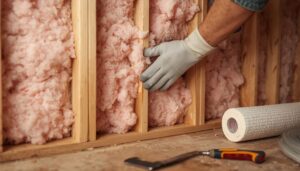
Attic insulation reduces heat transfer between your conditioned living space and the unconditioned attic above, lowering heating loads in winter (when heat rises through the ceiling) and cooling loads in summer (when sun-baked attic air heats the ceiling below). Modern attic insulation types: blown-in cellulose ($0.80-$1.50 per square foot installed), blown-in fiberglass ($0.50-$1.10), batt fiberglass ($0.65-$1.40 if professionally installed), and spray foam ($1.50-$5).
How Much Does Attic Insulation Cost?
Adding 6-10 inches of blown-in insulation to a 1,500-square-foot attic costs $1,000-$3,500 installed: $0.50-$1.50 per square foot for fiberglass or cellulose, $1.50-$5 per square foot for spray foam. Federal tax credit covers 30% up to $1,200 per year (through 2032). Many utilities offer additional rebates of $0.10-$0.50 per square foot.
| Insulation Type | R-Value per Inch | Installed Cost per sq ft |
|---|---|---|
| Blown-in fiberglass | R-2.2-R-2.7 | $0.50-$1.10 |
| Blown-in cellulose | R-3.2-R-3.8 | $0.80-$1.50 |
| Fiberglass batts (R-30 to R-38) | R-2.9-R-4.3 | $0.65-$1.40 |
| Open-cell spray foam | R-3.5-R-4.0 | $1.50-$3.00 |
| Closed-cell spray foam | R-6.0-R-7.0 | $2.50-$5.00 |
How Long Does Attic Insulation Last?
Properly installed attic insulation lasts the life of the home (50+ years) with one caveat: blown-in insulation settles 10-25% over the first 5 years (account for this by blowing higher than the target R-value initially). Spray foam is essentially permanent. Batt insulation can sag or compress in walls but stays in place in horizontal attic application. Replace insulation only if water damaged, rodent contaminated, or removed for renovation.
Can I DIY Attic Insulation?
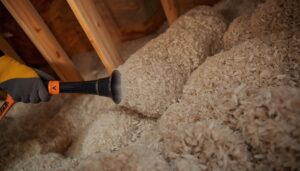
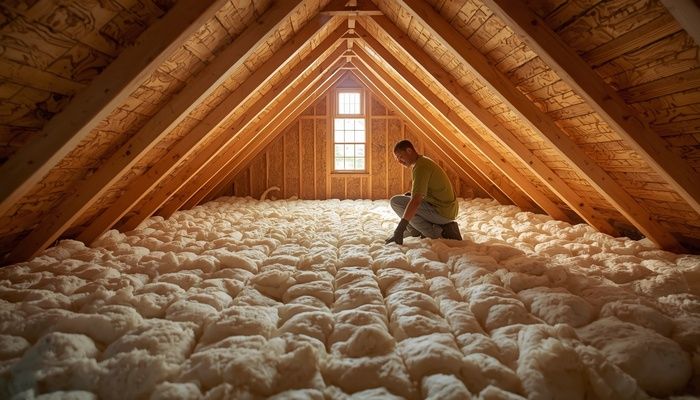
Blown-in insulation (cellulose or fiberglass) is genuinely DIY with rented equipment. Plan a Saturday: rent a blower ($0 with 10+ bag purchase from Home Depot or Lowes, otherwise $50-$80/day), wear N95 mask and goggles, lay walkway planks across the joists, run the blower hose through a roof vent or attic access, blow insulation to the target depth, working from the far corner toward the access. The most common DIY error is failing to install rafter baffles at the eaves; they keep insulation from blocking soffit vent airflow.
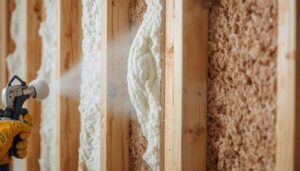
Spray foam application is professional-only. The chemical mixing and curing requires precise equipment and dedicated installer training. DIY spray foam kits (Touch’n Foam, Froth-Pak) exist but are limited to small projects (under 200 square feet) and require careful temperature control and PPE.
What Are the Best Attic Insulation Options?
For DIY, blown-in cellulose (Greenfiber Cocoon) and blown-in fiberglass (Owens Corning AttiCat) are the consumer standards available at big-box stores with free blower rental. For pro installation, Owens Corning, Johns Manville, and CertainTeed are the major U.S. manufacturers; pick the contractor first and let them choose the brand they stock.
| Type | Brand | DIY/Pro | Notes |
|---|---|---|---|
| Blown-in cellulose | Greenfiber Cocoon | DIY-friendly | $0.30-$0.50/sq ft material |
| Blown-in fiberglass | Owens Corning AttiCat | DIY-friendly | $0.40-$0.60/sq ft material |
| Fiberglass batts R-38 | Owens Corning EcoTouch | DIY | $0.50-$0.80/sq ft |
| Spray foam open-cell | Icynene | Pro only | Best for cathedral or vaulted |
| Spray foam closed-cell | Lapolla | Pro only | Highest R per inch |
When Should I Replace or Upgrade Attic Insulation?
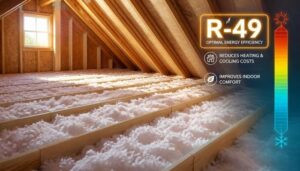
Add insulation when: existing attic insulation is below recommended R-value for your climate zone (R-38 minimum, R-49 to R-60 in northern climates), insulation is damaged from roof leaks or rodent infestation, you can see the joists across the attic floor (insulation has compressed below the joist top), or you are replacing the roof and have easy attic access. Removal is required only when insulation has been contaminated; otherwise, blow new insulation on top of existing.
How much attic insulation do I need?
Climate zone determines the target R-value: Zone 1-2 (Florida, southern Texas, Gulf Coast) R-30-R-49; Zone 3-4 (mid-Atlantic, southern California, Nevada) R-38-R-60; Zone 5-7 (Pacific Northwest, Midwest, Northeast) R-49-R-60; Zone 7-8 (northern New England, Minnesota, Alaska) R-49-R-60+. The Department of Energy recommends R-60 for most areas of the U.S. above Zone 3.
Cellulose vs fiberglass insulation: which is better?
Cellulose has slightly higher R-value per inch (R-3.5 vs R-2.5 for fiberglass), better air sealing, and is made from 75-85% recycled newspaper. Fiberglass is non-combustible, lower cost, and not attractive to rodents. For most attic applications, cellulose is the slight winner; for fire safety in densely insulated wall cavities, fiberglass.
Should I have radiant barrier installed in my attic?
Radiant barrier (reflective foil under the roof deck) reduces heat gain by 5-15% in hot climates with significant attic sun exposure. Cost: $0.10-$0.50 per square foot of attic floor area. Best in Sun Belt climates with attic ductwork; marginal benefit in colder climates. Often paired with attic insulation upgrade for a complete energy package.
Will adding attic insulation cause moisture problems?
Possible if the attic is not properly ventilated. Modern attic insulation requires soffit vents at the eaves and ridge vents at the peak for airflow. Without ventilation, moisture from the conditioned living space below condenses in the cold insulation, causing mold and rot. Always inspect or upgrade ventilation when adding insulation; ratio of vent area to attic area should be at least 1:300.