
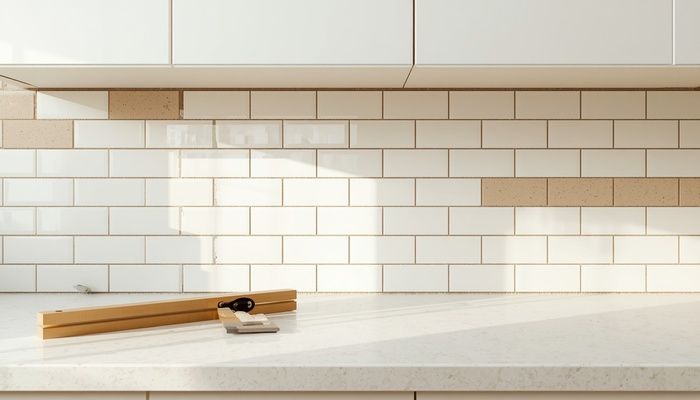
Tile Backsplash Installation Made Easy
TL;DR: A tile backsplash is the wall surface between your kitchen countertops and upper cabinets, protecting drywall from water and grease while adding visual interest. DIY material cost is $150-$500 for an average 30-square-foot kitchen backsplash; professional installation runs $1,500-$5,000. Quality tile lasts the life of the kitchen. Top tile categories: ceramic, porcelain, glass, natural stone, and metal. Tile backsplash is one of the highest-ROI DIY projects available; expect a long weekend for first-time installers.
What Is Tile Backsplash Installation?
A backsplash is the vertical wall surface from countertop to the underside of upper cabinets (typically 18 inches tall), made of tile, glass, stone, metal, or panel material. The installation steps are: prep the wall, dry-lay tile, mix and apply thinset mortar, set tile, allow 24 hours to cure, mix and apply grout, clean, and seal (for porous tile and grout). Common tile sizes range from 1-inch mosaic to 12-inch subway tiles.
How Much Does Tile Backsplash Installation Cost?
DIY tile backsplash for a 30-square-foot average kitchen: $80-$300 for tile, $20-$40 for thinset, $15-$30 for grout, $15-$30 for sealer, $25-$60 for tile saw rental or tile cutter, and $20-$50 for trowels, spacers, and tools. Total: $150-$500. Professional installation runs $40-$150 per square foot of backsplash area or $1,500-$5,000 for an average kitchen.
| Tile Type | Material per sq ft | Total Installed per sq ft |
|---|---|---|
| Ceramic subway tile | $3-$8 | $15-$30 |
| Porcelain | $5-$15 | $20-$40 |
| Glass mosaic | $8-$25 | $25-$60 |
| Natural stone (travertine, marble) | $10-$30 | $30-$80 |
| Penny round or hexagon mosaic | $12-$30 | $30-$70 |
How Long Does Tile Backsplash Installation Last?
Tile backsplash lasts the life of the kitchen (30+ years) when properly installed over a sound substrate. The grout is the maintenance item: re-seal annually with a penetrating grout sealer, or replace grout (regrouting) every 10-15 years if staining or cracking begins. Individual broken tiles can be removed and replaced; matching grout color is the harder challenge.
Can I DIY Tile Backsplash Installation?
Tile backsplash is one of the most rewarding DIY projects. Plan a long weekend: day 1 prep walls and dry-lay the pattern; day 2 mix and apply thinset, set tile, let cure overnight; day 3 grout, clean, and seal. Tools: notched trowel (1/4 by 1/4 V-notch for most backsplash tile), tile spacers (1/16 or 1/8 inch), tile cutter for ceramic or wet saw for porcelain ($50/day rental), grout float, sponge.
Mosaic sheets on mesh backing are the easiest tile for first-timers; the tiles are already spaced and you just align sheets. Large-format tile (12 inch and larger) requires a longer notched trowel and careful back-buttering for full thinset coverage. Outlets within the backsplash area require pulling back the outlet to allow tile to fit behind it; turn off power first.
What Are the Best Tile Backsplash Installation Options?
For tile sourcing, big-box stores (Home Depot, Lowes) carry mainstream ceramic and porcelain. Tile dealers (Tile Shop, Floor & Decor, Daltile) offer broader selection including imported stone and designer glass. For tools, Roberts and QEP make the consumer-grade cutters most DIYers use; for porcelain or natural stone, rent a wet saw.
| Item | Best For | Cost |
|---|---|---|
| Snap tile cutter | Ceramic up to 12 in | $30-$60 |
| Wet saw rental | Porcelain, stone | $50/day |
| 1/4 in V-notch trowel | Most subway tile | $8-$15 |
| 1/16 in tile spacers | Subway tile | $3-$8/bag |
| Custom Building Products thinset | All-purpose | $15-$30/bag |
When Should I Replace or Upgrade Tile Backsplash Installation?
Replace tile backsplash when: multiple tiles have cracked from impact or substrate movement, grout is permanently stained and cannot be cleaned or re-grouted, the underlying drywall is water-damaged (mold behind the tile), the style has dated dramatically (avocado green tile from 1975), or you are renovating the kitchen. Individual broken tiles can be replaced if you have spare tiles from the original install; matching production tile from years prior is often impossible.
Should I use thinset or mastic for backsplash?
Modified thinset (a polymer-modified cement) is the preferred adhesive for backsplash because it works with porcelain, stone, and large-format tile. Mastic (pre-mixed acrylic adhesive) is easier to use but is not approved for shower walls, large tiles, or stone. For backsplash, choose thinset for best results.
How do I cut tile around outlets?
Mark the outlet location on the tile, drill 1/4 inch holes at the corners, and cut between holes with a jigsaw (ceramic) or wet saw with a plunge cut (porcelain). Pull the outlet forward 1/2 inch using outlet box extenders before tiling so the outlet flush-mounts in the tile face.
Do I need to seal my grout?
Yes for cement-based grout (the most common type). Apply a penetrating grout sealer 72 hours after grouting, then annually. Epoxy grout (more expensive, harder to install) does not need sealing and resists stains better than cement grout.
Subway tile vs mosaic vs large format: which should I pick?
Subway tile (3×6 inch white ceramic) is the classic American look, easiest to install for DIYers, and has the broadest design appeal. Mosaic sheets are the easiest to install and add visual interest. Large format (12 inch and up) is the modern minimalist look and reduces visible grout lines, but is harder to set flat. Pick by style; all three are durable.