
Sistering Explained: What It Is and Why It Matters
TL;DR: Sistering is a carpentry technique where a new board (the “sister”) is attached alongside an existing, damaged, or undersized joist or rafter to reinforce it. It’s commonly used to fix sagging floors, strengthen weakened beams, or increase load capacity—without removing the original structural member. This process can be done with wood or engineered lumber, and it’s a cost-effective way to restore structural integrity in older homes or during renovations.
What Is Sistering?
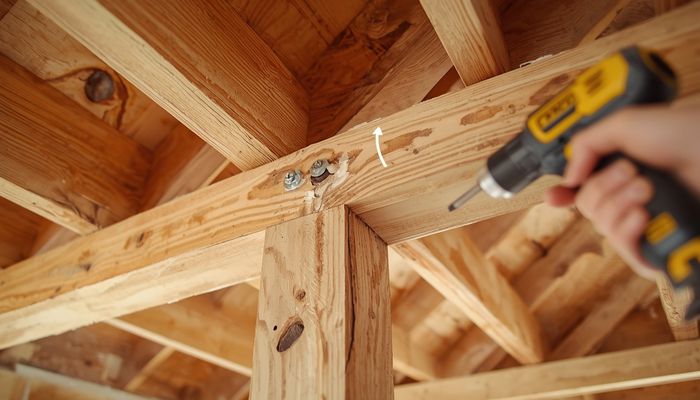
Sistering is a method of reinforcing an existing structural member—typically a floor joist, ceiling joist, or roof rafter—by attaching a new piece of lumber directly alongside it. The new board is called the “sister” because it’s joined to the original like a sibling, sharing the load and providing extra strength.
In home improvement, sistering is most often used to repair or upgrade wooden floor systems. For example, if a joist is cracked, rotted at the ends, or notched incorrectly (common in older homes), a sister joist can be nailed, screwed, or bolted to the side to restore its load-bearing capacity. The sister must span from one support point (like a foundation wall or beam) to another, and it’s typically the same depth and species of lumber as the original.
How Sistering Works
Sistering relies on the principle of load distribution. When two boards are fastened together, they act as a single, stronger unit. Here’s the technical process in simple terms:
- Assessment: First, you identify the damaged or undersized joist. Common signs include sagging floors, cracked drywall above, or bouncy floors when walking.
2. Sizing the Sister: The new board must be at least the same depth as the original (e.g., a 2×8 sister for a 2×8 joist). Length is critical—it should span from bearing wall to bearing wall (or at least 3 feet past any damage on both sides, per most building codes). For example, if a joist is rotted at one end, the sister might extend 4 feet past the rot and onto the foundation sill.
3. Fastening: The sister is attached using construction adhesive and structural screws (like Simpson Strong-Tie or GRK screws) or 16d nails, spaced every 12–16 inches along the length. The goal is to create a tight, solid bond that prevents movement.
4. Support During Work: If the floor above is already sagging, temporary jacks or supports are placed under the joist before sistering. This lifts the floor to its original height and eliminates stress on the new sister.
5. Completing the Connection: Once the sister is in place, the floor is leveled, and any gaps are shimmed. The new board becomes part of the load path, sharing weight with the original.
Real-world example: In a 1950s ranch home, a homeowner noticed a 1-inch sag in the living room floor. The original 2×8 joists were spaced 24 inches apart (too wide by modern standards). The contractor sistered each joist with a new 2×8, reducing the effective spacing to 12 inches. The sag disappeared, and the floor felt solid.
Why Sistering Matters in Home Improvement
Sistering is a go-to solution for several common problems because it’s less invasive and cheaper than full replacement:
- Repairing Rot or Damage: Instead of tearing out a rotted joist (which might require removing subfloor, flooring, and ceiling below), you sister a new board to the healthy portion. This saves time and money. According to the National Association of Home Builders, sistering costs roughly 30–50% less than full joist replacement.
- Upgrading for Modern Loads: Older homes often had joists sized for lighter loads (like plaster and lath). Today’s homes may have heavy tile floors, granite countertops, or large appliances. Sistering adds capacity without altering the structure.
- Fixing Sagging Floors: Over time, wood can creep or warp. Sistering with a straight, kiln-dried board lifts and levels the floor, preventing future issues like cracked tile or uneven hardwood.
- Meeting Code Requirements: When finishing a basement or adding a second story, existing joists may not meet current span tables. Sistering is an approved method to bring them up to code (per the International Residential Code, Section R502.2.1).
- Avoiding Headaches: Sistering can be done from below (in a crawlspace or basement) or above (if subfloor is removed). It avoids the mess and structural risk of cutting out old lumber.
Sistering vs Related Terms
| Term | Definition | Key Difference |
|---|---|---|
| Sistering | Attaching a new board alongside an existing joist to reinforce it. | The original joist remains in place. |
| Sistering vs. Splicing | Splicing joins two shorter boards end-to-end (often with a metal plate or scarf joint) to make a longer one. | Splicing creates a new member from pieces; sistering reinforces an existing one. |
| Sistering vs. Bridging | Bridging uses diagonal braces (wood or metal) between joists to distribute point loads and prevent twisting. | Bridging doesn’t add load capacity; it stabilizes. |
| Sistering vs. Blocking | Blocking adds short pieces of lumber between joists at mid-span to prevent rotation and stiffen the floor. | Blocking stiffens but doesn’t increase joist strength. |
| Sistering vs. Joist Replacement | Joist replacement removes the old joist entirely and installs a new one. | Replacement is more invasive and requires temporary support of the entire floor above. |
When to choose sistering over replacement: Sistering is ideal when the original joist is still structurally sound except for localized damage, or when access is limited (e.g., a finished ceiling below). Replacement is better if the joist is severely rotted, insect-damaged, or if you need to change the floor layout.
When to Use Sistering
Sistering is appropriate in these scenarios:
- Localized rot or insect damage: If only the end of a joist is rotted (e.g., from a leaking sill plate), sistering a new piece from the support past the rot is standard practice.
- Overspanned joists: If a 2×8 joist spans 14 feet but the span table says 12 feet max for your load, sistering with a 2×8 or adding a second sister can fix it.
- Notched or drilled joists: A joist that’s been notched too deeply (more than 1/6 of its depth) or drilled with oversized holes can be reinforced with a sister on each side.
- Adding heavy fixtures: If you plan to install a cast-iron bathtub, large aquarium, or heavy kitchen island, sistering the joists under that area adds targeted strength.
- When access is limited: In a basement with a finished ceiling, you can sister from below by cutting out small sections of drywall and working through the joist bays.
When NOT to use sistering: Avoid sistering if the original joist is completely rotten, if there’s active termite damage, or if the floor system needs to be redesigned (e.g., removing a load-bearing wall). In those cases, consult a structural engineer.
Frequently Asked Questions About Sistering
1. Can I sister a joist myself, or do I need a contractor?
If you’re comfortable with basic carpentry, have a helper, and the joist is accessible (e.g., open basement ceiling), you can DIY. You’ll need a circular saw, drill, level, and structural screws. However, if the floor is sagging significantly or the joist is part of a load-bearing wall, hire a licensed contractor or engineer to avoid safety risks.
2. What size lumber should I use for sistering?
Use the same depth as the existing joist (e.g., 2×8 sister for a 2×8 joist). For width, a single 2x is standard, but if the joist is badly damaged, you may need two sisters (one on each side). The lumber should be #2 or better grade, kiln-dried to prevent shrinkage.
3. How far should a sister joist extend past a damaged area?
Building codes typically require at least 3 feet of overlap past the damaged section on each side, or full bearing at both ends. For example, if a joist has a 2-foot rot spot, the sister should extend at least 3 feet beyond that on both ends (total length = damage length + 6 feet minimum). Always check local codes.
4. Can sistering fix a bouncy floor?
Yes, but it depends on the cause. If the bounce is from undersized joists (e.g., 2x8s spanning too far), sistering with larger lumber (like a 2×10) or adding multiple sisters can stiffen the floor. If the bounce is from wide joist spacing (24 inches on center), sistering reduces effective spacing to 12 inches, which often solves the problem.
5. Is sistering allowed by building codes?
Yes, the International Residential Code (IRC) and most local codes permit sistering for repair and reinforcement, provided the sister is properly fastened and spans from support to support
Flooring Industry Standards: For official grading standards and installation guidelines, consult the National Wood Flooring Association (NWFA) and the World Floor Covering Association (WFCA). The Family Handyman also offers excellent DIY flooring installation guides.


25 years installing flooring and I still say solid hardwood is worth the premium. Nothing beats the resale value.
Switched from eggshell to satin for my kitchen trim and the wipeability is unreal. Ketchup, grease, marker — comes right off.