
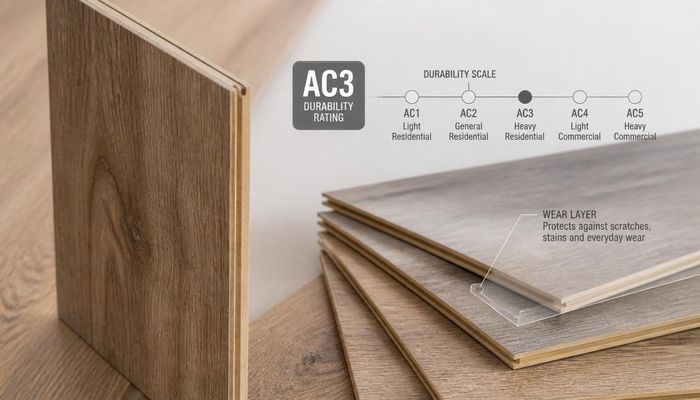
Laminate AC Rating Explained: What It Is and Why It Matters
TL;DR: Laminate AC rating (Abrasion Class) measures how durable a laminate floor is against wear, scratches, and daily foot traffic. Ratings range from AC1 (light residential) to AC5 (heavy commercial). Choosing the right AC rating ensures your floor lasts for years without premature damage, saving you money and hassle.
What Is Laminate AC Rating?
Laminate AC rating stands for “Abrasion Class,” a standardized industry rating that tells you how well a laminate floor can withstand surface wear and tear. Developed by the European Producers of Laminate Flooring (EPLF) and adopted globally, the AC rating is a simple 1-to-5 scale that measures a floor’s resistance to abrasion, impact, staining, and fading.
Think of it like a toughness score for your flooring. A higher AC number means the laminate can handle more abuse before showing signs of wear, such as scratches, scuffs, or dull spots. For homeowners, this rating is the most reliable shortcut to matching a floor to the demands of a specific room.
How Laminate AC Rating Works
The AC rating is determined through a standardized lab test called the Taber Abraser test. In this test, a rotating wheel with abrasive paper is pressed against a laminate sample for a set number of rotations. The test measures how many cycles it takes to wear through the decorative layer and expose the core material.
Here’s the breakdown of each rating level:
- AC1 (Light Residential): Suitable for low-traffic areas like bedrooms or closets. Withstands about 900–1,000 abrasion cycles in testing.
- AC2 (General Residential): Good for medium-traffic rooms like dining rooms or home offices. Handles around 1,500–2,000 cycles.
- AC3 (Heavy Residential / Light Commercial): The most common choice for living rooms, hallways, and family rooms. Passes about 2,500–3,000 cycles. This is the minimum recommended for most homes with kids or pets.
- AC4 (General Commercial): Built for heavy household use or light commercial spaces like small offices or retail shops. Withstands 4,000+ cycles. Ideal for busy entryways or kitchens.
- AC5 (Heavy Commercial): The toughest rating, designed for high-traffic public areas like stores, schools, or restaurants. Exceeds 6,000 cycles. Overkill for most homes unless you have a large, active family or a home-based business.
The test also checks for resistance to impacts (like dropped objects) and staining (from spills), but abrasion is the primary measure.
Why Laminate AC Rating Matters in Home Improvement
Choosing the wrong AC rating can lead to premature floor failure. For example, installing an AC1-rated laminate in a busy kitchen might show visible wear in just 1–2 years, while an AC4-rated floor in the same space could last 15–20 years with proper care.
Here’s why it matters for homeowners:
- Cost vs. Longevity: Higher AC ratings cost more per square foot, but they save money long-term by avoiding early replacement. An AC3 floor in a living room might cost $3–$4 per square foot, while an AC4 could be $4–$6—but the AC4 lasts twice as long in heavy use.
- Room-Specific Needs: A bedroom needs less protection than an entryway where shoes, dirt, and moisture are common. Matching the rating to the room prevents overpaying for unnecessary durability or underpaying for a floor that wears out fast.
- Warranty Protection: Many laminate warranties require a minimum AC rating for coverage in certain rooms. For instance, a warranty might void coverage if you use AC1 in a kitchen because it’s not rated for that environment.
- Resale Value: A properly rated floor that still looks good after years adds to your home’s appeal. A worn-out floor from a low rating can be a red flag to buyers.
Laminate AC Rating vs Related Terms
Understanding how AC rating compares to other flooring metrics helps you make smarter choices:
- AC Rating vs. Wear Layer Thickness: In luxury vinyl plank (LVP), wear layer thickness (measured in mils) is the durability metric. Laminate uses AC rating instead, which measures actual abrasion resistance rather than just thickness. A 20-mil wear layer in LVP is roughly equivalent to an AC4 laminate, but they’re not directly interchangeable.
- AC Rating vs. Janka Hardness: Janka hardness measures how resistant a solid wood floor is to denting. Laminate doesn’t have a Janka rating because its surface is a photographic layer, not solid wood. AC rating is the laminate equivalent, focusing on surface wear rather than indentation.
- AC Rating vs. Grade (in Laminate): Some manufacturers use terms like “grade A” or “grade B” to describe visual quality (color consistency, knot patterns). This is separate from AC rating, which only measures durability. A high-grade laminate can still have a low AC rating, and vice versa.
When to Use Laminate AC Rating
You should check the AC rating before buying any laminate floor, especially in these scenarios:
- High-Traffic Areas: For entryways, hallways, and living rooms used daily, choose AC3 or AC4. AC3 is sufficient for most homes, but AC4 is better if you have heavy furniture, pets, or kids who drag toys.
- Kitchens and Bathrooms: While laminate isn’t waterproof (unlike LVP), some newer products have moisture-resistant cores. For kitchens, AC4 is recommended because of high foot traffic and potential spills. For bathrooms, stick with AC3 or AC4, but never AC1 or AC2.
- Basements: Basements often have moisture issues, so durability is less critical than moisture resistance. However, AC3 is a safe baseline for a basement family room. Avoid AC1 or AC2 in basements because they can’t handle the wear from occasional rough use.
- Commercial Spaces: If you’re installing laminate in a home office, rental property, or small shop, AC4 or AC5 is mandatory. AC3 might pass in a low-traffic office but will fail in a waiting area or retail space.
- Budget Decisions: If budget is tight, prioritize AC rating over visual appeal. A plain AC4 floor will outlast a fancy AC2 floor, saving you replacement costs. For low-traffic rooms like guest bedrooms, AC2 is fine and saves money.
Frequently Asked Questions About Laminate AC Rating
Q: Is a higher AC rating always better for a home?
A: Not always. AC5 is overkill for most homes and costs significantly more. For typical households, AC3 or AC4 is the sweet spot—durable enough for daily use without paying for commercial-grade toughness you won’t need.
Q: Can I use AC2 laminate in a kitchen?
A: It’s not recommended. AC2 is only rated for light residential use, and kitchens have heavy foot traffic, spills, and dropped items. An AC2 floor in a kitchen might show wear in 1–2 years. Stick with AC3 or AC4 for kitchens.
Q: How long does an AC3 laminate floor last?
A: With proper care (regular cleaning, furniture pads, and avoiding excessive moisture), an AC3 laminate floor can last 15–20 years in a typical home. In high-traffic areas like hallways, you might see wear after 10–12 years.
Q: Does AC rating affect price?
A: Yes. AC1 and AC2 laminates are cheapest (often $1–$2 per square foot), while AC3 and AC4 are mid-range ($3–$5), and AC5 can be $6–$8 or more. However, the price difference is usually worth it for the extra durability.
Q: Can I find laminate with no AC rating?
A: Avoid it. Reputable manufacturers always list AC ratings. If a product doesn’t have one, it’s likely low-quality or counterfeit. Stick with brands that clearly state the AC rating on the packaging or spec sheet.
Now that you understand laminate AC rating, check our guide on how to choose the best laminate flooring for your home to match durability, style, and budget for every room.
}
},
{
“@type”: “Question”,
“name”: “Can I use AC2 laminate in a kitchen?”,
“acceptedAnswer”: {
“@type”: “Answer”,
“text”: “It’s not recommended. AC2 is only rated for light residential use, and kitchens have heavy foot traffic, spills, and dropped items. An AC2 floor in a kitchen might show wear in 1–2 years. Stick with AC3 or AC4 for kitchens.”
}
},
{
“@type”: “Question”,
“name”: “How long does an AC3 laminate floor last?”,
“acceptedAnswer”: {
“@type”: “Answer”,
“text”: “With proper care (regular cleaning
Flooring Industry Standards: For official grading standards and installation guidelines, consult the National Wood Flooring Association (NWFA) and the World Floor Covering Association (WFCA). The Family Handyman also offers excellent DIY flooring installation guides.

How long does a typical installation take for a 200 sq ft room? Trying to plan my weekend project.
Exactly the kind of practical info homeowners need. Clear, concise, and actionable.