
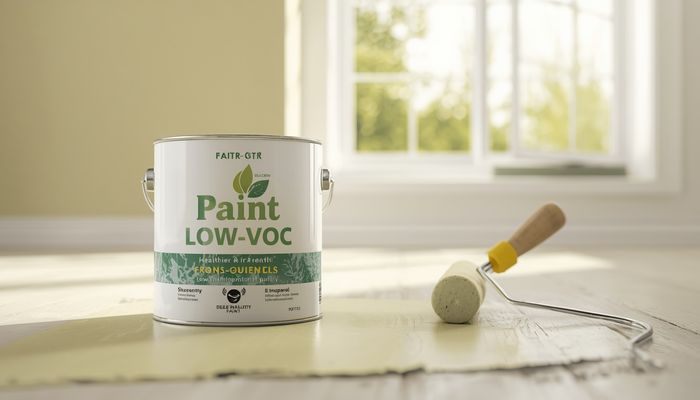
Low-VOC Explained: What It Is and Why It Matters
TL;DR: Low-VOC means a product contains fewer volatile organic compounds (VOCs) — chemicals that evaporate into the air and can harm indoor air quality and health. In home improvement, low-VOC paints, adhesives, and finishes release fewer fumes during and after application, making them safer for your family, pets, and the environment.
What Is Low-VOC?
Low-VOC stands for low volatile organic compounds. VOCs are chemicals found in many home improvement products that easily become vapors or gases at room temperature. Common VOCs include formaldehyde, benzene, ethylene glycol, and toluene — ingredients often present in paints, stains, varnishes, adhesives, and sealants.
In the United States, the Environmental Protection Agency (EPA) regulates VOC content in architectural coatings (like paint). For a product to be labeled “low-VOC,” it typically must contain 50 grams per liter (g/L) or fewer of VOCs. By contrast, conventional paints can have 150–250 g/L or more.
The term “low-VOC” applies broadly across home improvement categories:
- Paints and primers — interior and exterior
- Stains and varnishes — for wood, concrete, and masonry
- Adhesives — flooring, tile, and construction adhesives
- Caulks and sealants — around windows, doors, and trim
- Cleaning products — paint thinners and solvents
How Low-VOC Works
Low-VOC products achieve their reduced chemical content through reformulation. Manufacturers replace high-VOC solvents (which help paint flow and dry) with water or other low-toxicity alternatives. This changes how the product behaves:
Drying and curing: Low-VOC paints often dry faster than traditional paints because water evaporates more quickly than petroleum-based solvents. However, they may require longer curing times (the chemical bonding process) — sometimes 2–4 weeks before the surface is fully durable.
Application differences: Low-VOC paints are typically thinner than conventional paints. You may need two coats instead of one for even coverage, especially over dark or porous surfaces. They also tend to be less “sticky” on vertical surfaces, so brushing technique matters more.
Odor: The most noticeable difference is smell. Traditional paint smells strongly of solvents; low-VOC paint smells faintly of wet paint — like damp cardboard or mild latex. This odor usually disappears within 24–48 hours, compared to days or weeks for high-VOC products.
VOC levels vary by product type:
- Zero-VOC paint: Under 5 g/L (often labeled “zero-VOC”)
- Low-VOC paint: Under 50 g/L
- Conventional paint: 100–250+ g/L
- Oil-based paint: 300–500+ g/L
Why Low-VOC Matters in Home Improvement
The primary reason to choose low-VOC products is indoor air quality. According to the EPA, indoor air can be 2–5 times more polluted than outdoor air — and painting or finishing projects can spike VOC levels to 1,000 times safe outdoor limits during application.
Health benefits:
- Reduces short-term symptoms like headaches, dizziness, nausea, and eye/throat irritation
- Lowers long-term risks of respiratory issues, liver damage, and certain cancers (from chronic exposure)
- Safer for children, pregnant women, elderly, and people with asthma or allergies
Practical advantages:
- Faster re-occupancy: You can sleep in a freshly painted room the same night with low-VOC paint (though ventilation is still recommended)
- Less odor disruption: No need to vacate your home for days during a project
- Better for pets: Birds, cats, and small animals are especially sensitive to chemical fumes
Environmental impact: VOCs contribute to ground-level ozone (smog) and can persist in landfills when products are disposed of. Low-VOC options reduce this footprint.
Low-VOC vs. Related Terms
| Term | VOC Content (paint) | Key Feature |
|
Official VOC Resources: For detailed information on VOCs and indoor air quality, visit the EPA guide on VOCs. California’s South Coast Air Quality Management District (SCAQMD) sets some of the strictest VOC limits in the country and is widely referenced by paint manufacturers. For health-related VOC concerns, consult OSHA workplace exposure limits.
——|———————|————-|
| Zero-VOC | Under 5 g/L | No detectable VOCs; may still contain trace amounts |
| Low-VOC | Under 50 g/L | Reduced chemical content; safer than conventional |
| No-VOC | Under 5 g/L (same as zero-VOC) | Often used interchangeably with zero-VOC |
| Natural paint | Varies | Made from plant-based ingredients (milk, clay, lime); may have zero or low VOCs |
| Conventional paint | 100–250+ g/L | Standard petroleum-based; strong odor and higher health risks |
Important caveat: Zero-VOC paints may still contain added VOCs if you add colorant. Many paint brands use tinting systems that introduce 2–10 g/L of VOCs per gallon. Always ask for “low-VOC colorants” or check the final mixed product label.
When to Use Low-VOC
Low-VOC products are appropriate for most interior home improvement projects, but especially:
Bedrooms and nurseries: Children spend up to 12 hours a day in their rooms. Low-VOC paint is the standard recommendation for baby rooms and children’s spaces.
Kitchens and bathrooms: These high-humidity areas benefit from low-VOC paint’s faster drying time and reduced mold-promoting chemicals.
Basements and enclosed spaces: Poor ventilation makes high-VOC products dangerous. Low-VOC options are safer in basements, closets, and laundry rooms.
Homes with occupants sensitive to chemicals: If anyone in your household has asthma, allergies, or chemical sensitivities, low-VOC is non-negotiable.
Projects where you’ll sleep in the room the same night: A weekend painting project in a guest room? Low-VOC means you don’t need to relocate.
When NOT to use low-VOC:
- Outdoor projects: UV exposure and weather resistance may be better with conventional exterior paints (though low-VOC exterior options exist)
- High-traffic areas (some brands): Some low-VOC paints are less durable than conventional. Look for “low-VOC + scrubbable” labels for kitchens and hallways
- Matching existing finishes: If you’re touching up old oil-based paint, low-VOC water-based may not adhere properly
Frequently Asked Questions About Low-VOC
Is low-VOC paint completely safe?
No product is 100% safe, but low-VOC paint is significantly safer than conventional paint. It still contains some chemicals (binders, pigments, preservatives) that can cause mild irritation. Always ventilate during and after application. For maximum safety, choose zero-VOC paint and use low-VOC colorants.
How long do VOCs linger after painting?
Conventional paint VOCs can off-gas for weeks to months. Low-VOC paint odors typically disappear within 24–48 hours, and VOC levels return to baseline in 2–4 days with good ventilation. Zero-VOC paints may show no detectable VOCs after 24 hours.
Can I use low-VOC paint over old paint?
Yes, as long as the old paint is in good condition (not peeling, chalking, or lead-based). Low-VOC latex paint adheres well to most existing latex or oil-based paints after proper cleaning and priming. Use a low-VOC primer first for best results.
Does low-VOC paint cost more?
Typically, yes — low-VOC paints cost 10–30% more than conventional paints. A gallon of premium low-VOC interior paint ranges from $35–$60, compared to $20–$40 for conventional. However, many major brands (Benjamin Moore, Sherwin-Williams, Behr) now offer low-VOC options at comparable prices to their mid-range lines.
How do I verify a product is truly low-VOC?
Look for third-party certifications like:
- Green Seal (GS-11 for paint)
- GREENGUARD Gold (for low chemical emissions)
- MPI (Master Painters Institute) X-Green rating
- SCAQMD Rule 1113 compliance (California’s strict standard)
Also check the product data sheet for actual VOC content in g/L. If the label says “low-VOC” but doesn’t list a number, it may be marketing hype.
Now that you understand what low-VOC means and why it matters, check our guide on [How to Choose the Safest Paint for Your Home] for a step-by-step comparison of top low-VOC brands and application tips.




Home stager here — I can ALWAYS tell when someone skipped primer. The finish just doesn’t look professional.
Commercial glue-down LVP is what we use in 90% of our retail jobs. The wear layer bonded with full glue coverage is practically indestructible.