How Sump Pumps Protect Your Basement from Flooding
TL;DR: A sump pump is an electric pump installed in a pit in your basement floor that automatically removes groundwater before it can flood the space. Installed cost runs $600-$2,500 for a primary submersible pump, plus $150-$500 for a battery backup. Expect 7-10 years of life from a primary pump and 5-7 years from a battery backup. Top brands: Zoeller, Liberty Pumps, and Wayne. Pump replacement in an existing pit is a 1-2 hour DIY job; first-time pit installation requires concrete cutting and is a job for a basement waterproofing contractor.
What Is Sump Pumps?
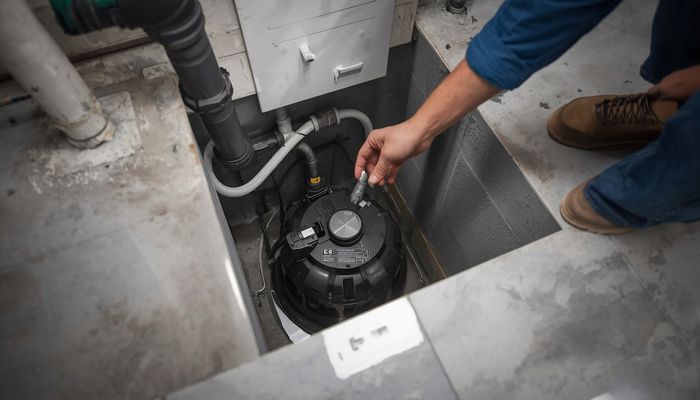
A sump pump sits inside a perforated basin (the sump pit) set into the basement or crawlspace floor. As groundwater rises, a float switch activates the pump, which sends water out through a 1-1/2 inch discharge pipe to at least 10 feet from the foundation. Submersible pumps (in the pit, underwater) are quieter and more common; pedestal pumps (motor above the pit) cost less but are louder and shorter-lived. Most homes need a 1/3 HP or 1/2 HP primary pump moving 30-60 gallons per minute.
How Much Does Sump Pumps Cost?
A primary submersible sump pump costs $600-$1,500 installed in an existing pit, or $1,500-$2,500 if the pit, discharge line, and check valve are all new. Adding a battery backup pump (highly recommended) costs an additional $150-$500 for the unit and $200-$400 for installation. A full setup with primary, backup, and battery typically lands around $1,200-$2,800.
| Component | DIY Cost | Installed Cost |
|---|---|---|
| Primary submersible pump (1/3 HP) | $120-$250 | $400-$900 |
| Primary submersible pump (1/2 HP) | $180-$400 | $600-$1,200 |
| Battery backup pump | $200-$500 | $400-$900 |
| New sump pit + discharge | $150-$300 | $900-$1,800 |
| Water-powered backup | $250-$500 | $700-$1,400 |
The biggest cost variable is whether you need a new pit. Cutting and forming a 22 inch deep pit through a concrete slab adds $700-$1,500 to the job. Discharge line routing matters too: a long underground line to daylight (the preferred discharge) can add $200-$600 in trenching.
How Long Does Sump Pumps Last?
Primary sump pumps last 7-10 years on average. Heavy duty cast iron 1/2 HP units (Zoeller M53, Liberty 257) can hit 12-15 years if the pit stays clean and the pump does not cycle constantly. Plastic-bodied 1/3 HP economy pumps fail at 4-7 years. Battery backup pumps last 5-7 years; the AGM batteries themselves need replacement every 3-5 years regardless of pump condition.
Can I DIY Sump Pumps?
Replacing a primary pump in an existing pit is a strong DIY project. Unplug the old pump, unscrew the discharge union, pull the pump out, slide the new one in, attach the new check valve and discharge fitting, and plug it in. Most jobs take 60-90 minutes. Test by pouring 5 gallons of water into the pit and confirming the float trips at the right level.
Cutting a new pit through concrete is not DIY. You need a wet concrete saw, a 4-foot deep hole through the slab, gravel base, the basin, and routed discharge plumbing. Hire a basement waterproofing contractor or a plumber familiar with sump work. Permits are often required.
What Are the Best Sump Pumps Options?
Zoeller and Liberty Pumps dominate the residential market for reliability. Wayne is a strong budget pick. For battery backup, Basement Watchdog and Zoeller Aquanot Fit are the top choices. Match pump HP to your pit depth and your basement square footage, not arbitrary specs.
| Brand | Model | Type | Capacity | Price |
|---|---|---|---|---|
| Zoeller | M53 | 1/3 HP submersible | 43 GPM | $200-$280 |
| Zoeller | M63 | 1/2 HP submersible | 65 GPM | $280-$380 |
| Liberty Pumps | 257 | 1/2 HP submersible | 70 GPM | $280-$400 |
| Wayne | CDU980E | 3/4 HP submersible | 75 GPM | $200-$300 |
| Basement Watchdog | BWE | Battery backup | 2,500 GPH | $280-$450 |
For most basements under 1,500 sq ft, the Zoeller M53 (1/3 HP) is the workhorse default. Larger basements, high water tables, or homes with sub-slab drainage systems should step up to a 1/2 HP unit like the Zoeller M63 or Liberty 257. Always pair the primary with a battery backup; over 60% of basement flooding happens during power outages caused by the same storm.
When Should I Replace or Upgrade Sump Pumps?
Replace the primary pump when it is over 7 years old and you can hear the motor strain or cycle rapidly, the pit fills faster than the pump can clear it, you see rust on the body, or the check valve repeatedly fails. Replace the battery on a backup pump every 3-5 years even if the unit still works. A backup that has never cycled in 5 years should still be tested by lifting the float; pumps seize from disuse.
Do I really need a battery backup sump pump?
Yes if your basement is finished, has stored items of any value, or has any history of water. Power outages cause the majority of basement flooding events because the storms that bring water also knock out power. A $300-$500 backup is cheap insurance against a $5,000-$30,000 flood claim.
Where should sump pump water discharge?
At least 10 feet from the foundation, downhill, into a drywell, storm drain, or daylight outlet on the property. Never connect to a sanitary sewer (illegal in most jurisdictions) or to a footing drain. In cold climates, use a freeze-relief fitting to prevent winter backups.
How often should a sump pump run?
Healthy operation is every few minutes during heavy rain, once or twice a day during normal wet weather, and not at all in dry seasons. Constant cycling (every 30-60 seconds even when dry) indicates a stuck float, a failed check valve, or an undersized pit. A pump that has never cycled should still be tested every 3 months by pouring water in.
What is a water-powered backup sump pump?
A backup that uses your home’s municipal water pressure to create suction and remove water from the pit, requiring no battery. Pros: no battery to replace, runs indefinitely. Cons: uses 1 gallon of municipal water per 2 gallons pumped (added water bill), requires city water at 40+ PSI, will not work on well systems. Cost: $300-$500 plus $400-$900 install.