
WPC Core Explained: What It Is and Why It Matters
TL;DR: WPC (Wood Plastic Composite) core is the inner layer of certain flooring and decking products, made from a blend of wood fibers and plastic. It offers superior water resistance, dimensional stability, and durability compared to traditional materials like solid wood or MDF. WPC core is commonly found in luxury vinyl plank (LVP) flooring and composite decking, making it a popular choice for basements, bathrooms, and outdoor spaces.
What Is WPC Core?
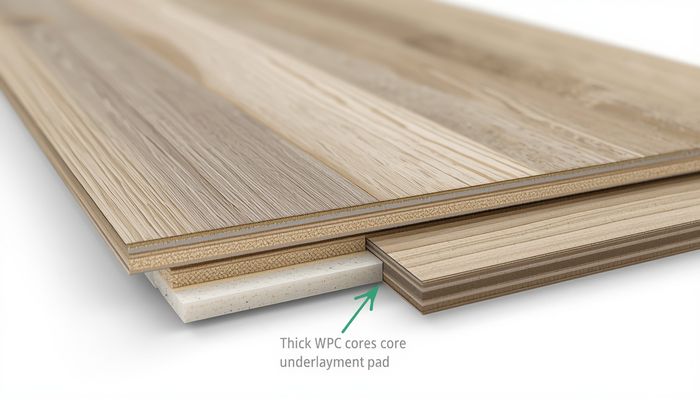
WPC core, short for Wood Plastic Composite core, is a engineered material used as the structural middle layer in flooring and decking products. It combines wood fibers (typically sawdust or wood flour) with thermoplastics (like polyethylene or polypropylene) and binding agents. The result is a dense, rigid, and waterproof core that mimics the look and feel of natural wood but outperforms it in moisture-prone environments.
In flooring, WPC core sits between the top wear layer (usually vinyl or laminate) and the bottom backing layer. In decking, it forms the entire board. The wood content gives it a natural appearance and texture, while the plastic provides resistance to rot, warping, and insect damage.
How WPC Core Works
The manufacturing process involves mixing wood fibers (40–60% by weight) with plastic pellets (30–50%) and additives like UV stabilizers, colorants, and foaming agents. The mixture is heated to around 300–400°F and extruded through a die to form planks or boards. During extrusion, a foaming agent creates tiny air pockets within the core, reducing weight and improving insulation properties.
This closed-cell structure is key to WPC’s performance. Unlike open-cell materials (like traditional wood or MDF), the plastic matrix prevents water from penetrating the core. Even if the top wear layer is scratched or damaged, moisture cannot seep into the core and cause swelling, delamination, or mold growth. The wood fibers add rigidity and dimensional stability, meaning the planks won’t expand or contract significantly with temperature or humidity changes.
In flooring, WPC core is typically 4–8mm thick, providing a solid, quiet feel underfoot. It’s often paired with a pre-attached foam underlayment for sound dampening. In decking, WPC boards are usually 1–2 inches thick and hollow or solid, depending on the brand.
Why WPC Core Matters in Home Improvement
WPC core addresses two major pain points for homeowners: moisture damage and installation complexity. Here’s why it matters:
- Waterproof performance: WPC core is 100% waterproof, not just water-resistant. This makes it suitable for basements, bathrooms, laundry rooms, and kitchens where spills, humidity, or flooding are concerns. Traditional laminate or engineered wood can swell and buckle in these areas.
- Dimensional stability: WPC doesn’t expand or contract like solid wood or laminate. You can install it over large areas without worrying about gaps or buckling. It’s also compatible with radiant floor heating systems.
- Comfort and quiet: The closed-cell core absorbs sound and provides cushioning underfoot. Many homeowners find WPC flooring quieter than traditional laminate or tile.
- Longevity: WPC decking can last 25–30 years without staining, sealing, or painting, unlike wood which requires annual maintenance. It resists splintering, cracking, and insect damage.
For DIYers, WPC flooring often features a click-lock installation system that doesn’t require glue or nails. This makes it a popular choice for homeowners who want a professional-looking floor without hiring a contractor.
WPC Core vs Related Terms
| Term | Composition | Water Resistance | Best Use Case |
|---|---|---|---|
| WPC Core | Wood fibers + plastic | 100% waterproof | Basements, bathrooms, kitchens, outdoor decks |
| SPC Core (Stone Plastic Composite) | Limestone powder + plastic | 100% waterproof | High-traffic areas, commercial settings |
| Solid Wood Core | Solid hardwood | Not waterproof (can warp) | Living rooms, bedrooms (low moisture) |
| MDF Core (Medium Density Fiberboard) | Wood fibers + resin | Not waterproof (swells) | Budget furniture, laminate flooring |
| HDF Core (High Density Fiberboard) | Compressed wood fibers | Water-resistant (not waterproof) | Laminate flooring (better than MDF) |
Key difference: WPC is softer and warmer underfoot than SPC, but SPC is harder and more impact-resistant. WPC is better for residential use; SPC is better for commercial spaces or homes with heavy furniture.
When to Use WPC Core
Consider WPC core products in these scenarios:
- Basements or below-grade rooms: WPC flooring can be installed directly over concrete slabs without a vapor barrier, as long as the slab is level and dry. It won’t absorb moisture from the concrete.
- Bathrooms and laundry rooms: The waterproof core prevents water damage from leaks or splashes. Just ensure the seams are properly sealed (click-lock planks are water-resistant, but not fully sealed at edges).
- Kitchens: Spills, dropped dishes, and high foot traffic are no issue. WPC is softer than tile or stone, reducing breakage of dropped items.
- Outdoor decks and patios: WPC decking is ideal for areas exposed to rain, snow, or humidity. It stays cooler than dark composite decking and doesn’t rot.
- Radiant heated floors: WPC’s dimensional stability means it won’t warp or gap when heated. Check manufacturer specs for maximum temperature limits (usually 85–100°F).
Avoid WPC core in:
- Extreme temperature swings (e.g., unheated sunrooms) – plastic can become brittle in freezing conditions.
- Direct sunlight for extended periods – UV exposure can cause fading or warping without proper UV stabilizers. Use WPC products rated for outdoor use.
Frequently Asked Questions About WPC Core
Q: Is WPC flooring really waterproof?
A: Yes, the core itself is 100% waterproof. However, the seams between click-lock planks are not sealed, so water can still seep through if spilled and left standing for long periods. For true waterproofing, choose a product with a sealed or glued joint system.
Q: Can WPC flooring be installed over tile or concrete?
A: Yes, as long as the subfloor is clean, level, and dry. WPC flooring is a floating floor, meaning it sits on top of the subfloor without being glued or nailed. You can install it over existing tile, vinyl, or concrete, but avoid installing over carpet or soft underlayment.
Q: How does WPC compare to laminate flooring?
A: WPC is heavier, thicker, and more waterproof than laminate. Laminate has a fiberboard core that swells when wet. WPC also feels softer and quieter underfoot. However, laminate is often cheaper and has better scratch resistance on its top layer.
Q: Does WPC decking get hot in the sun?
A: Yes, but less than solid plastic or dark-colored composites. WPC’s wood content helps moderate temperature. Light-colored WPC decking is cooler than dark colors. You can still walk barefoot on it in summer, but it may be uncomfortable in direct midday sun.
Q: Can WPC be painted or stained?
A: No, WPC is not paintable or stainable like wood. The plastic content prevents adhesion. If you want a different color, you must buy a product with the desired color molded into the core. Some manufacturers offer color-through options.
Now that you understand WPC core, check our guide on [SPC vs WPC Flooring: Which Is Right for Your Home?] for a deeper comparison.
Flooring Industry Standards: For official grading standards and installation guidelines, consult the National Wood Flooring Association (NWFA) and the World Floor Covering Association (WFCA). The Family Handyman also offers excellent DIY flooring installation guides.
First time working with vinyl plank and I learned you need the right blade. Used a cheap utility knife and got ragged cuts.
I’ve tried this approach in my own home. Results were good but not miraculous. Solid option for the price point.