
Defining Cellulose Insulation: Key Facts for Homeowners
TL;DR: Cellulose insulation is a loose-fill or dense-packed insulation made primarily from recycled newspaper (up to 85% post-consumer content). It offers an R-value of R-3.2 to R-3.8 per inch, is treated with borate-based fire retardants (boric acid/borax), costs $0.80–$1.50 per sq ft installed, and provides superior air sealing and soundproofing compared to fiberglass. It is eco-friendly, with a recycled content of 75–85% and low embodied energy.
What Is Cellulose Insulation
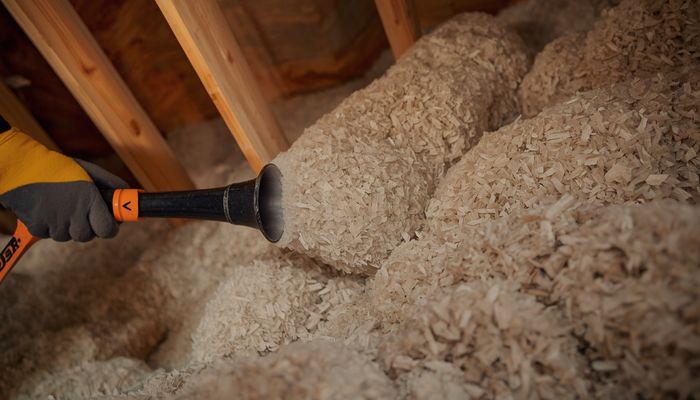
Cellulose insulation is a thermal and acoustic insulation material made from recycled paper fiber—primarily old newspapers, cardboard, and other wood-based cellulose products. The raw material is shredded, milled, and then treated with fire retardants (typically boric acid, borax, or ammonium sulfate) to meet fire safety standards (ASTM C739). It is most commonly installed as loose-fill in attics or dense-packed into wall cavities using pneumatic blowing equipment.
Unlike fiberglass batts, cellulose is a “blown-in” insulation, meaning it conforms tightly to irregular spaces, pipes, and wiring, reducing air gaps. It is classified as a “green” insulation material because it contains 75–85% recycled content and requires significantly less energy to manufacture than fiberglass or foam. Typical densities range from 1.5 to 3.0 lbs per cubic foot for loose-fill applications and up to 3.5–4.0 lbs per cubic foot for dense-pack walls.
How Cellulose Insulation Works (Technical)
Cellulose insulation works by trapping millions of tiny air pockets within its fibrous structure, slowing the transfer of heat through conduction, convection, and radiation. Here’s the technical breakdown:
- Thermal Resistance (R-Value): Cellulose has an R-value of R-3.2 to R-3.8 per inch at 75°F mean temperature. For comparison, fiberglass loose-fill is R-2.2 to R-2.7 per inch. At a 12-inch depth, cellulose achieves approximately R-40, while fiberglass needs 14–15 inches for the same value.
- Air Sealing: Because cellulose is blown in as a dense material, it settles and fills gaps, reducing air infiltration by up to 30% compared to fiberglass. This is due to its higher density (1.5–3.0 lb/ft³ vs. 0.5–1.0 lb/ft³ for fiberglass).
- Fire Retardant Chemistry: Cellulose is treated with boric acid (H₃BO₃) and borax (Na₂B₄O₇·10H₂O) at concentrations of 15–20% by weight. These borates release water vapor when heated, smothering flames and preventing ignition. They also inhibit mold and insect growth. The treatment meets ASTM E84 Class I (flame spread index of 25 or less).
- Moisture Management: Cellulose is hygroscopic—it can absorb and release moisture without losing insulation performance. At 50% relative humidity, it holds about 8% moisture by weight, while fiberglass holds less than 1%. This helps buffer humidity but requires a vapor barrier in high-humidity climates.
- Sound Dampening: The dense fiber structure absorbs sound waves effectively, providing an STC (Sound Transmission Class) improvement of 10–15 points over standard fiberglass in wall assemblies.
Installation requires a pneumatic blower machine that mixes the cellulose with air and conveys it through hoses to the desired location. For dense-pack walls, the material is blown in at 3.5–4.0 lbs/ft³ to prevent settling and maximize thermal performance.
Why Cellulose Insulation Matters (Real Examples)
Example 1: Attic Retrofit in Chicago, IL
A 1,500 sq ft home with R-19 fiberglass batts (installed in 1980s) was upgraded to R-50 cellulose via blown-in attic insulation. The homeowner reported a 25% reduction in heating bills (from $2,400 to $1,800 annually) and a noticeable improvement in comfort—fewer cold spots and drafts. The project cost $1,200 (installed) and paid for itself in 2.5 years.
Example 2: New Construction Wall in Portland, OR
A builder used dense-pack cellulose (R-21 at 5.5 inches) in 2×6 walls instead of fiberglass batts. Blower door tests showed a 30% lower air leakage rate (from 4.5 ACH50 to 3.2 ACH50). The cellulose also reduced noise from a nearby highway, with the homeowner noting “a library-quiet interior.” Cost premium over fiberglass was $0.30/sq ft, but energy savings of $150/year offset it within 5 years.
Example 3: Fire Safety in California Wildfire Zone
A home in Sonoma County installed cellulose insulation in an attic and walls. During a nearby wildfire (2020), embers landed on the roof, but the borate-treated cellulose did not ignite. The home survived while neighbors with fiberglass insulation had attic fires. The borates also prevented mold growth after a subsequent roof leak.
Environmental Impact: Producing 1 ton of cellulose insulation uses 30% less energy than fiberglass and 90% less than spray foam. It diverts 3–4 cubic yards of newspaper from landfills per ton of insulation. Over a 50-year lifespan, cellulose saves 10–20 tons of CO₂ per home compared to non-renewable alternatives.
Cellulose Insulation vs Related Terms (Table)
| Property | Cellulose (Loose-Fill) | Fiberglass (Loose-Fill) | Spray Foam (Open-Cell) | Spray Foam (Closed-Cell) |
|---|---|---|---|---|
| R-Value per Inch | R-3.2 to R-3.8 | R-2.2 to R-2.7 | R-3.5 to R-3.8 | R-6.0 to R-7.0 |
| Recycled Content | 75–85% | 20–40% | 0–5% | 0–5% |
| Installed Cost (per sq ft) | $0.80 – $1.50 | $0.60 – $1.20 | $1.50 – $2.50 | $2.50 – $4.50 |
| Air Sealing | Good (dense-pack) | Poor to Fair | Excellent | Excellent |
| Fire Retardant | Borate-treated (Class I) | Non-combustible (glass) | Requires thermal barrier | Requires thermal barrier |
| Moisture Resistance | Hygroscopic (absorbs) | Non-absorbent (capillary) | Closed-cell: waterproof | Closed-cell: waterproof |
| Sound Absorption (STC) | Excellent (STC 50+) | Good (STC 40–45) | Good (STC 45–50) | Fair (STC 35–40) |
| Lifespan | 50+ years (stable) | 50+ years (settles) | 20–30 years (may shrink) | 50+ years |
Learn More: The U.S. Department of Energy offers detailed guides on all insulation types and their recommended applications. For professional standards, visit the Spray Polyurethane Foam Alliance (SPFA) or the North American Insulation Manufacturers Association (NAIMA).
When to Use Cellulose Insulation
Cellulose insulation is ideal for the following scenarios:
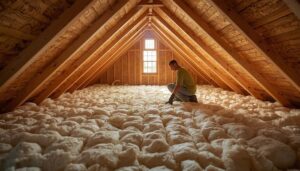
- Attic Retrofits: Blown-in loose-fill cellulose is perfect for topping up existing insulation or replacing old, settled fiberglass. It fills gaps around joists and trusses, providing uniform coverage.
- Wall Cavities (Dense-Pack): For new construction or existing walls (via injection), dense-pack cellulose creates an air seal and prevents settling. Use in 2×4 or 2×6 walls.
- Soundproofing: Home theaters, bedrooms, or shared walls benefit from cellulose’s superior acoustic performance.
- Eco-Friendly Projects: LEED-certified homes, net-zero buildings, or any project aiming for low embodied carbon.
- Fire-Prone Regions: The borate treatment provides an extra layer of fire resistance, making it a safer choice in wildfire zones.
- Irregular Spaces: Blown-in cellulose conforms to odd-shaped attics, knee walls, and areas with plumbing or wiring.
Avoid cellulose in: Below-grade applications (basements, crawlspaces) without proper vapor barriers, or in very humid climates (coastal) unless protected by a Class I vapor retarder. Also, avoid if there is persistent moisture issues—cellulose can absorb water and lose R-value if wet.
FAQ
Q: Does cellulose insulation settle over time?
A: Yes, loose-fill cellulose can settle 5–10% over the first year due to gravity and vibration. This is accounted for by over-blowing to the target R-value. Dense-pack cellulose (3.5+ lbs/ft³) does not settle significantly.
Q: Is cellulose insulation safe for health?
A: Yes, when properly installed. The borate treatment is non-toxic to humans and pets (boric acid is used in eye wash). However, installation generates dust—wear a respirator. Once installed, it emits no VOCs and is safe for occupants.
Q: How does cellulose compare to fiberglass for moisture?
A: Cellulose can absorb moisture (up to 30% by weight) without losing R-value, but it must dry out to prevent mold. Fiberglass does not absorb water but allows air to carry moisture through. In humid climates, a vapor barrier is needed for both.
Q: What is the typical cost for a 1,000 sq ft attic?
A: For R-49 (12–14 inches), expect $1,000–$1,800 installed. DIY rental blowers cost $50–$100/day, with material at $0.30–$0.50 per sq ft. Professional installation is recommended for dense-pack walls.
Q: Can I install cellulose myself?
A: Yes, for attic loose-fill. Rent a blower from a home improvement store (e.g., Home Depot or Lowe’s). For walls, hire a professional due to the need for proper density and air sealing.

I’ve tried this approach in my own home. Results were good but not miraculous. Solid option for the price point.
Exactly the kind of practical info homeowners need. Clear, concise, and actionable.