
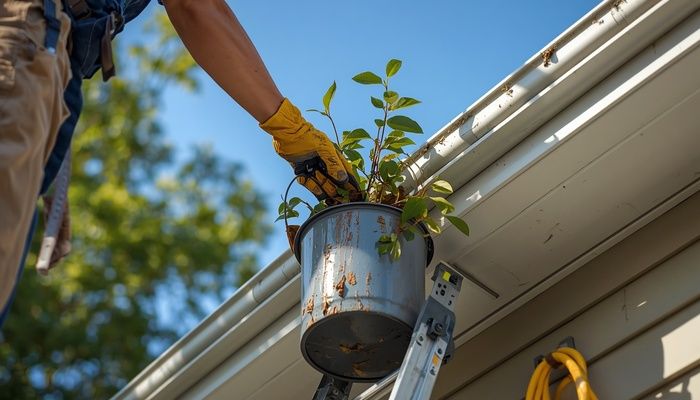
TL;DR: Cleaning your gutters before summer prevents water damage, pest infestations, and foundation issues. This guide covers how to safely remove debris, inspect for damage, and make simple repairs. Expect to spend 2-4 hours for a typical single-story home, with costs under $50 for basic tools and supplies.
What You’ll Need
| Tools & Materials | Estimated Cost |
|---|---|
| Sturdy ladder (extension or step ladder) | $100–$300 (if you don’t have one) |
| Gutter scoop or small garden trowel | $5–$15 |
| Heavy-duty work gloves | $10–$20 |
| Safety glasses | $5–$10 |
| Garden hose with spray nozzle | $15–$30 (if needed) |
| 5-gallon bucket or tarp | $5–$10 |
| Gutter repair tape or silicone caulk | $8–$15 |
| Downspout brush or plumber’s snake | $10–$20 |
| Gutter guards (optional) | $20–$50 per section |
| Leaf blower with gutter attachment (optional) | $50–$150 (if purchased) |
Total estimated cost: $0–$50 if you already own basic tools; $150–$600 if you need to buy a ladder and other gear.
How Long Does This Take?
For a typical 1,500-square-foot single-story home with about 150 linear feet of gutters, plan on:
- Setup and safety check: 10–15 minutes
- Removing debris from gutters: 30–60 minutes
- Flushing gutters and downspouts: 20–30 minutes
- Inspecting for damage: 15–30 minutes
- Making minor repairs: 30–60 minutes
- Cleanup: 10–15 minutes
Total time: 2–4 hours for a first-time DIYer. Experienced homeowners can finish in 1–2 hours.
Safety First
Ladder safety is critical. Falls from ladders are a leading cause of home improvement injuries. Follow these rules:
- Always place your ladder on firm, level ground. Never on soft soil or wet grass without a ladder leveler.
- Extend the ladder at least 3 feet above the roof edge for stability.
- Use the 4-to-1 rule: for every 4 feet of ladder height, move the base 1 foot away from the wall.
- Never lean or overreach. Climb down and move the ladder instead.
- Wear slip-resistant shoes with good grip.
- Never work alone. Have someone hold the ladder base or at least let someone know you’re working.
- Check for overhead power lines before positioning your ladder. Keep at least 10 feet away.
- Wear heavy-duty gloves to protect against sharp debris, insects, and animal droppings.
- Use safety glasses to keep dirt and debris out of your eyes.
Warning: If your home is two stories or higher, or if you have a steep roof, consider hiring a professional. Don’t risk your safety for a DIY project.
Step-by-Step Instructions
- Prepare your work area and tools. Spread a tarp or place a 5-gallon bucket under your work area to catch falling debris. Put on your gloves, safety glasses, and slip-resistant shoes. Set up your ladder on a stable, level spot near the first section of gutter you’ll clean.
- Remove large debris by hand or with a scoop. Starting at the downspout end of the gutter, use your gloved hands or a gutter scoop to remove leaves, twigs, and dirt. Place the debris in your bucket or onto the tarp. Work your way along the gutter, moving the ladder every 4–6 feet. Never overreach—it’s safer to climb down and reposition the ladder.
- Check and clear the downspout openings. Once the gutter is mostly clear, look inside the downspout opening (the hole where water flows down). Remove any visible clogs with your hand or a scoop. If you see a blockage deeper inside, use a downspout brush or plumber’s snake to break it up.
- Flush the gutters with a garden hose. Attach a spray nozzle to your garden hose and turn on the water. Starting at the end farthest from the downspout, spray water along the gutter to flush out remaining dirt and small debris. Watch the water flow toward the downspout—if it pools or backs up, there’s still a clog you missed.
- Test the downspout flow. Place the hose nozzle directly into the downspout opening and turn the water on full blast. Have someone watch the bottom of the downspout to confirm water flows freely. If water doesn’t come out or trickles slowly, you have a stubborn clog. Use a plumber’s snake or a pressure washer attachment to clear it.
- Inspect gutters for damage. While the gutters are wet and clean, look for these issues:
- Cracks, holes, or rust spots—especially at seams and corners.
- Sagging sections where the gutter pulls away from the fascia board.
- Loose or missing gutter hangers (the brackets that hold the gutter in place).
- Separated joints where two gutter sections meet.
- Make minor repairs. For small cracks or holes (under 1/4 inch), clean the area with a rag and apply gutter repair tape or silicone caulk. For larger holes, use a patch kit from a hardware store. If you find a loose hanger, tighten the screw or replace it. For separated joints, clean and dry the area, then apply a bead of silicone caulk before pressing the sections back together.
- Consider installing gutter guards. If you find heavy debris buildup every season, gutter guards can reduce future cleaning. Foam inserts, mesh screens, or brush-style guards cost $20–$50 per 4-foot section. Follow the manufacturer’s instructions for installation—most just snap or slide into place.
- Clean up and dispose of debris. Gather all leaves and debris from your tarp or bucket. Compost the organic material if possible, or bag it for trash. Rinse any mud or dirt off your driveway or lawn. Store your ladder and tools properly.
Common Mistakes to Avoid
- Cleaning gutters from the roof. Walking on a wet, debris-covered roof is extremely dangerous. Always use a ladder placed on the ground. Only work from the roof if you have proper safety harnesses and experience.
- Forgetting to check downspouts. Many homeowners clean the gutters but ignore the downspouts. A clogged downspout can cause water to overflow and damage your foundation. Always flush water through each downspout to confirm it’s clear.
- Using a pressure washer too aggressively. A pressure washer can blast debris out quickly, but it can also damage gutter seals, bend the metal, or force water behind the gutter. If you use one, keep the nozzle at least 2 feet away and use a low-pressure setting.
- Neglecting to inspect the roof and fascia. While cleaning gutters, look for damaged shingles, rotting fascia boards, or signs of pests. Catching these issues early can save you thousands in repairs. See our guide on how to inspect your roof for damage.
- Skipping summer preparation entirely. Many homeowners only clean gutters in fall. But spring and summer storms can bring heavy rain, pine needles, and seeds. A mid-summer cleaning prevents clogs during monsoon season. Read why summer gutter maintenance matters for more details.
When to Call a Professional
Some situations are best left to experienced gutter contractors. Call a pro if:
- Your home is two stories or taller. Working at heights above 20 feet requires specialized equipment and safety training.
- You see severe gutter damage. Large gaps, detached sections, or rusted-through gutters need replacement, not just cleaning.
- You find rotting fascia boards. This indicates long-term water damage that requires carpentry skills to repair. Learn more in how to replace rotted fascia boards.
- You’re uncomfortable on ladders. If you feel unsteady or anxious, don’t risk it. Professional gutter cleaning typically costs $100–$250 for a single-story home.
- You suspect pest infestations. Wasps, birds, or rodents in gutters require pest control first. See how to safely remove pests from gutters.
Frequently Asked Questions
Q: How often should I clean my gutters?
A: For most homes, clean gutters at least twice a year—once in late spring (after trees stop dropping seeds) and again in late fall (after leaves fall). Homes near pine trees or with overhanging branches may need quarterly cleaning.
Q: Can I use a leaf blower to clean gutters?
A: Yes, but only with a special gutter attachment kit that extends your reach. Without it, a leaf blower will just scatter debris. Even with the attachment, you’ll still need to manually remove heavy clogs and flush downspouts with water.
Q: Do gutter guards eliminate the need for cleaning?
A: No—gutter guards reduce debris buildup but don’t prevent it entirely. Pollen, small seeds, and dirt can still accumulate on top of guards. You’ll still need to inspect and clean them annually. Read gutter guard pros and cons to decide if they’re right for you.
Q: What should I do if water overflows from the gutter during a storm?
A: First, check if the downspout is clogged. If water spills over the front edge, the gutter may be pitched wrong. Gutters need a slight slope (about 1/4 inch per 10 feet) toward the downspout. Adjust hangers or hire a pro to re-pitch the gutter.
Q: Is it safe to clean gutters in the rain?
A: No. Wet ladders and slippery surfaces increase fall risk. Also, wet debris is heavier and harder to remove. Wait for a dry day with no rain in the forecast.