What to Expect During Sewer Line Replacement
TL;DR: Replacing a residential sewer line costs $3,000-$25,000 depending on length, depth, and method. Traditional dig-and-replace runs $50-$250 per linear foot; trenchless pipe bursting or lining runs $80-$250 per foot but skips landscape destruction. Modern PVC or HDPE sewer lines last 50-100 years; old clay or cast iron typically fails at 50-75 years. Top contractors use licensed plumbers with sewer cameras to scope before quoting. This is not a DIY project; sewer work requires permits, utility locates, and inspection in every U.S. jurisdiction.
What Is Sewer Line Replacement?
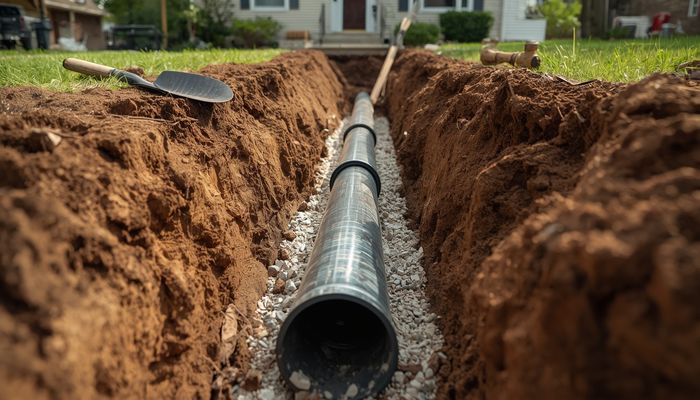
A sewer line (sewer lateral) is the underground pipe that carries wastewater from your home’s main drain stack to either the municipal sewer main in the street or a private septic tank. Residential laterals are typically 4-6 inches in diameter and 3-6 feet deep, made of PVC (homes built after 1980), cast iron (1920-1980), or vitrified clay tile (pre-1960). The homeowner is responsible for the lateral from the house to either the property line or the sewer main, depending on local code.
How Much Does Sewer Line Replacement Cost?
Sewer line replacement costs $3,000-$25,000 with a median around $7,500. Traditional excavation runs $50-$250 per linear foot. Trenchless methods (pipe bursting, cured-in-place lining) cost $80-$250 per foot but avoid tearing up driveways, patios, and mature landscaping, often netting a lower total project cost when surface restoration is factored in.
| Method | Cost per Foot | Typical Total |
|---|---|---|
| Open trench dig and replace | $50-$250 | $3,000-$15,000 |
| Pipe bursting (trenchless) | $80-$200 | $5,000-$15,000 |
| Cured-in-place pipe lining | $100-$250 | $6,000-$20,000 |
| Spot repair (single break) | $1,500-$4,500 flat | $1,500-$4,500 |
| Full replacement under driveway | $200-$400 | $10,000-$25,000 |
How Long Does Sewer Line Replacement Last?
Modern PVC and HDPE sewer lines last 50-100 years. Cast iron lasts 50-80 years before scale buildup and rust restriction. Vitrified clay (pre-1960) typically fails at 50-75 years due to root intrusion at joints. Orangeburg pipe (bituminized fiber, used 1945-1972) fails at 30-50 years and is considered an automatic replacement when found during inspection.
Can I DIY Sewer Line Replacement?
Sewer line replacement is not DIY. Excavation depth (4-6 feet) requires shoring per OSHA, utility locates are mandatory (call 811 first or face fines), and permits and inspection are required in every U.S. jurisdiction. Even cleaning roots from an existing line should be done with a rented sewer machine if you own one; homeowners cause more pipe damage than relief about 20% of the time.
What Are the Best Sewer Line Replacement Options?
Trenchless methods (pipe bursting and CIPP lining) have largely replaced open-trench in urban and developed-yard installations. Pick a plumber who owns a sewer camera and will scope the line before quoting; flat-rate quotes without a video inspection are guesswork.
| Method | Best For | Restoration Cost |
|---|---|---|
| Open trench dig | Open lawn, simple runs | High landscape damage |
| Pipe bursting | Same path, similar diameter | Minimal surface damage |
| CIPP lining | Brittle pipe, minimal root issue | Two access pits only |
| Spot repair | Single localized break | Small dig |
When Should I Replace or Upgrade Sewer Line Replacement?
Replace your sewer line when: repeated backups (more than twice a year) despite professional cleaning, video inspection shows multiple cracks, offsets at joints, root intrusion exceeding 30% of pipe diameter, the line is Orangeburg or pitch fiber, the line is clay over 60 years old with documented breaks, or you are planning a major foundation or landscape project that would require future tearing-up.
How do I know if my sewer line needs replacement?
Signs include slow drains throughout the house (not just one fixture), gurgling toilets, sewage smells in the yard, soft or sunken spots in the lawn following the lateral path, repeated backups, and lush grass growth in a stripe pattern (where leaks fertilize). A camera inspection ($200-$500) gives a definitive answer.
Does homeowners insurance cover sewer line replacement?
Standard homeowners insurance excludes sewer lines. A separate service-line endorsement ($30-$70 per year) covers $5,000-$25,000 for repair or replacement caused by wear, root intrusion, or accidental damage. If you have an aging line, this rider often pays for itself in one claim.
Pipe bursting vs lining: which is better?
Pipe bursting replaces the old pipe with new HDPE pulled through the old path, allowing slight diameter increase and full structural replacement. CIPP lining inserts a resin-saturated liner that hardens inside the old pipe, requiring the host pipe to retain structural integrity. Use bursting for collapsed or severely damaged lines; lining for intact but leaky pipes.
Will city sewer fees cover lateral replacement?
No. Municipal sewer agencies own the main in the street; the homeowner owns the lateral from the home to either the property line or the main, depending on local code. A few cities offer low-interest loans for lateral replacement but rarely pay for it directly.